
Clutter-Free Cat Subscription Value Metrics That Matter
By Naomi Chen • 20th Nov
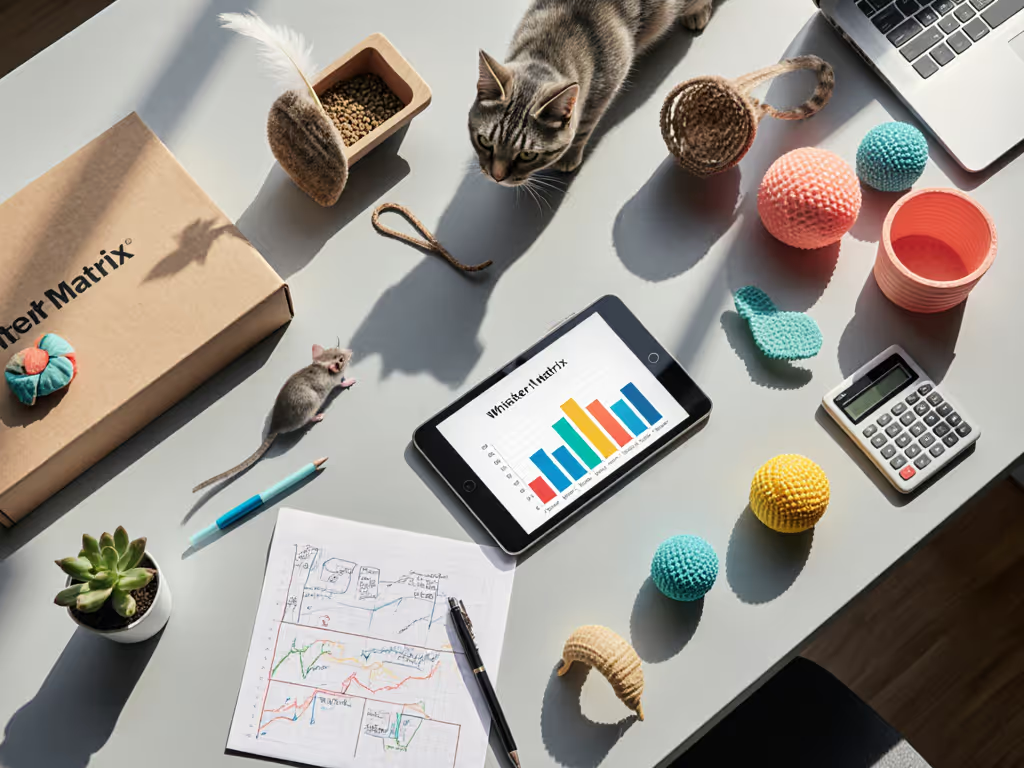
If your cat ignores another $30 subscription box value metrics report, leaving you with cluttered corners and sunk costs, you're not alone. Most cat toy subscription evaluation frameworks focus solely on price tags or item counts, ignoring the silent killers of success: space constraints, sensory overload, and toys that vanish into the void of disinterest. As someone who rebuilt play spaces in a sunlit but echo-prone loft, I've learned that true value lives where enrichment harmonizes with your home and your cat's instincts. Let's cut through the noise with practical metrics that prioritize calm, usability, and enduring joy, not just retail value tallies.
Calm rooms invite play; chaos shuts curiosity down.
5 Subscription Metrics That Prevent Clutter & Maximize Joy
Forget counting toys per box. These space-smart criteria reveal whether a subscription actually solves your pain points, without compromising your sanctuary.
1. Play Frequency > Item Count
A box stuffed with seven cheap toys loses value if your cat ignores six. Instead, track cost per play session: divide the box price by how often your cat engages with any included item. For a deeper breakdown of cost-per-play and durability scoring, see our cat toy cost analysis. If a $25 box delivers 15 meaningful play sessions (e.g., 3 sessions/week over 5 weeks), it outperforms a $30 box with toys used once. Prioritize services letting you skip themes that clash with your cat's prey profile (e.g., no feather wands for rodent-focused hunters). Pro tip: If customization isn't offered, skip boxes heavy on noisy crinkle toys, since they're often ignored by noise-sensitive cats in shared spaces.
2. Sensory Compatibility (Not Just "Fun")
Toy durability metrics matter less than whether a toy fits your home's sensory ecosystem. That jingle ball might thrill your cat, but if its noise disrupts your WFH calls or baby's naps, it becomes clutter. If noise is a concern, check our quiet cat ball picks tested for low decibels. Evaluate boxes by:
- Decibel level: Silent felt mice > bell-rattlers
- Visual weight: Neutral-toned sisal kickers > neon plastic
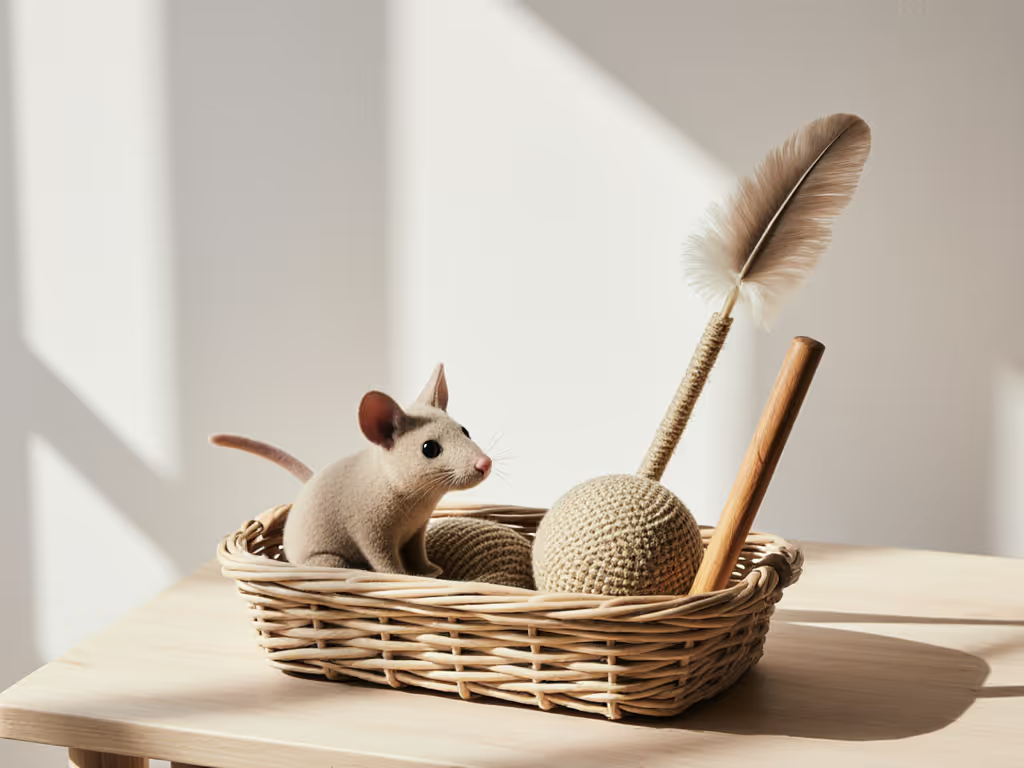
- Storage footprint: Flat-fold tunnels > bulky towers A single quiet, self-play toy that stays in rotation because it doesn't overwhelm your space is worth ten abandoned gadgets. I rebuilt our play corner with only a silent floor target and slim wand. Suddenly, evenings felt calm, and play increased because the room invited engagement.
3. Subscription Customization Value: Beyond "Surprise Me"
"Personalization" often means a sticker with your cat's name, not true space-smart adaptation. Real subscription customization value means:
- Opting out of treats (reducing clutter for cats with dietary limits)
- Choosing your theme (e.g., "quiet felt toys only" for apartment living)
- Adjusting delivery frequency to match your storage capacity (e.g., bi-monthly for small closets) Services like KitNipBox let you select item counts ($19.99 for 5 curated pieces), but few offer sensory filters. If a box consistently sends items you must hide or discard, its "value" is an illusion. True customization means store in sight, not in piles, every piece earning its place.
4. Aesthetic Integration (Your Home's "Yes" Test)
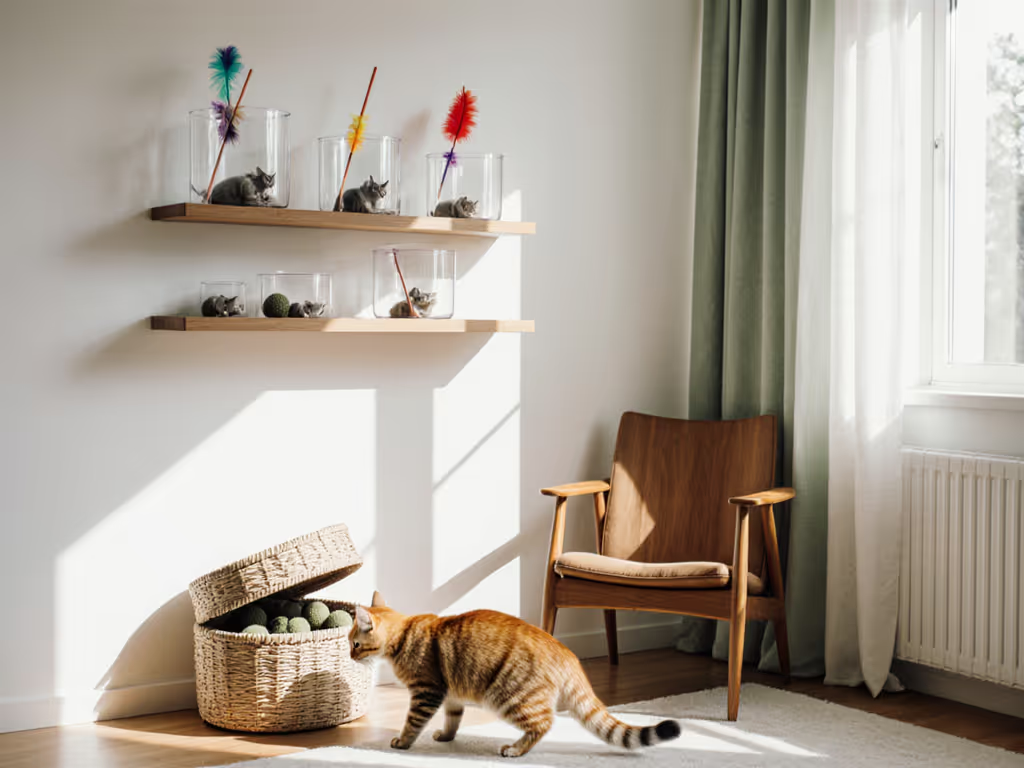
Will this toy sit proudly on your shelf, or get stuffed into a closet? Evaluate boxes by how seamlessly items blend with your palette:
- Natural fibers (jute, felt) over plastic
- Compact storage dimensions (e.g., baskets under 12x8x4" for shelf nesting)
- Neutral or muted colors that recede visually A $40 box loses value if its bright pink mouse shatters your calm aesthetic, forcing you to hide it. Conversely, a $25 box with two earth-toned wand toys that live on display delivers ongoing enrichment, no storage guilt. Remember: Toys that live out are played with more.
5. Long-Term Subscription ROI: Durability + Rotation Viability
Long-term subscription ROI isn't about retail value, it is about whether items last and stay rotated. Ask:
- Do toys withstand daily use without becoming safety hazards? (e.g., frayed strings -> discard)
- Can items be easily stored flat or nested? (e.g., collapsible tunnels)
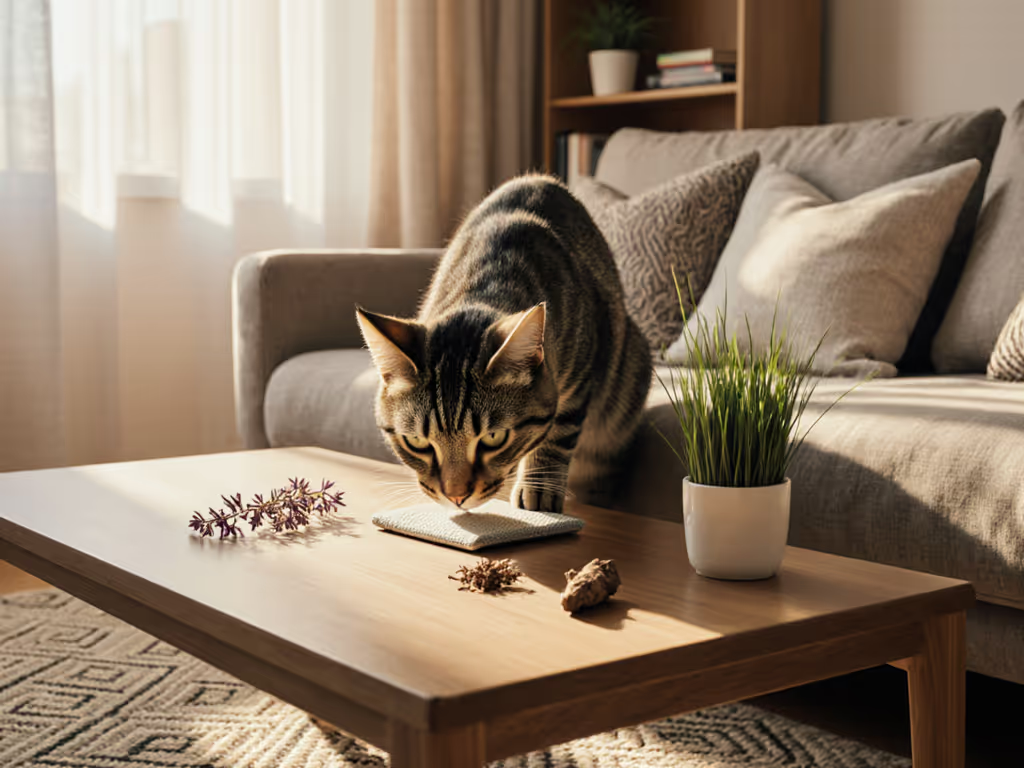
- Does the box support your rotation rhythm? (e.g., bi-monthly shipments for 3-toy swaps) One ultra-durable catnip pouch used 20+ times beats five flimsy toys used once. Track how many months one box sustains your rotation. Set an easy cadence with our toy rotation guide to keep engagement high without adding clutter. This reveals true cost efficiency.
Your Clutter-Free Path Forward
Ditch the "more toys = better enrichment" myth. The right subscription streamlines your routine, reduces visual noise, and respects your space, so your cat plays purposefully, and your home stays serene. Start auditing boxes by these five metrics: If a service can't adapt to your footprint, sensory needs, or aesthetic, it's clutter waiting to happen.
Further Exploration:
- Audit your last 3 boxes: How many items passed the "lives on display" test?
- Calculate cost per play session for your most-used toy vs. most-ignored
- Measure your tightest storage spot (e.g., closet shelf depth). Use this as your "maximum footprint" filter for future subscriptions
When enrichment harmonizes with your home, curiosity blooms. And that's a value no retail tally can measure.
Related Articles