Safe Cat Toys: Build Quality Without Clutter
By Naomi Chen • 13th Oct
When your apartment echoes with every dropped item, you learn quickly which cat toys survive the test of living in harmony. The secret isn't just about what you choose, it is about toy construction safety that respects both your cat's instincts and your home's tranquility. As someone who has measured square footage against play potential for over a decade, I've discovered that thoughtful toy selection isn't optional, it is essential for coexistence. Good cat toys shouldn't force you to choose between engagement and order; they should quietly integrate into your life as naturally as your morning coffee ritual.
Calm rooms invite play; chaos shuts curiosity down.
1. Prioritize Natural Fiber Selection with Safety in Mind
Material safety for cats extends beyond "non-toxic" labels, it is about what happens when your cat inevitably ingests small amounts. Natural fibers like cotton and tightly spun wool break down more safely in the digestive system than synthetic alternatives that might snag or bundle. In my experience testing yarn toys across three apartments (and two cats with persistent oral fixation), 100% cotton holds up to claw-testing while minimizing ingestion risks.
Look for:
- Tight-loop construction that prevents unraveling
- Machine-washable fibers (critical for hygiene)
- Zero metallic threads or loose embellishments
When we downsized to a sunlit but echo-prone loft, every clang traveled. Rebuilding our play corner taught me that the safest toys often come from the simplest materials, like the Yeowww! Banana Catnip Toy, which uses cotton fabric stuffed with organic catnip. Its seamless design eliminates choking points while delivering the mental stimulation cats crave.
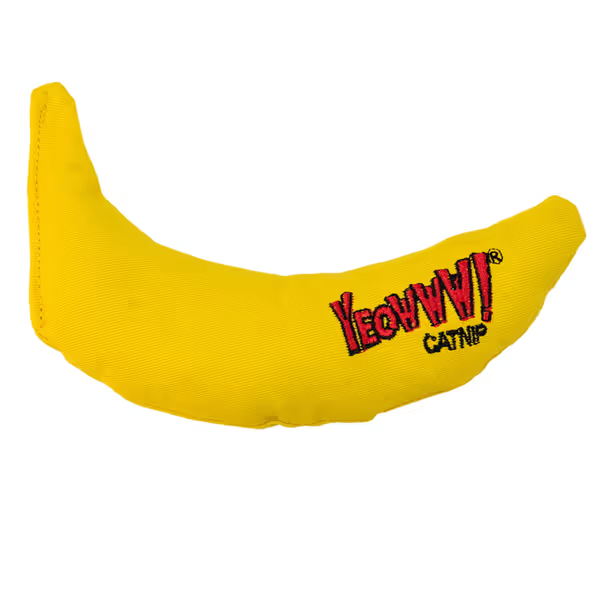
Yeowww! Yellow Banana Catnip Toy
Engages cats with potent organic catnip for joyful play sessions.
$5.58
Catnip Type100% Organic Catnip
Catnip Type100% Organic Catnip
Pros
Perfect size for clawing and kicking satisfaction.
Potent catnip provides long-lasting amusement.
Cons
Scent intensity can be strong for some.
Customers love this catnip toy for its perfect size that's good for clawing and kicking, and find it entertaining with endless amusement for their pets. The toy receives positive feedback for its value, with one customer noting it's worth its weight in catnip.
Customers love this catnip toy for its perfect size that's good for clawing and kicking, and find it entertaining with endless amusement for their pets. The toy receives positive feedback for its value, with one customer noting it's worth its weight in catnip.
2. Construct with Seam Integrity as Non-Negotiable
Toy construction safety lives or dies in the stitching. Weak seams create dangerous unraveling points and expose stuffing materials that shouldn't be ingested. After cataloging 17 different cat toys that failed within weeks, I developed a simple rule: if you can catch a claw in it, your cat can pull it apart. Tight, reinforced stitching with minimal exposed ends creates durability that withstands even enthusiastic pounce sessions.
Pro tip: Measure your toy's seam density, aim for at least 6 stitches per inch for optimal safety. This isn't just about longevity; it is about preventing accidental ingestion of internal components during play.
3. Size Appropriately for Safe Solo Play
A 4 inch toy might seem perfect for batting, but consider what happens when your cat tries to "capture" it. All self-play items should exceed your cat's mouth size, typically 3.5 to 4 inches in diameter for adult cats, while remaining small enough to maneuver comfortably in compact spaces. For multi-cat households, increase size slightly to prevent resource guarding while maintaining manageable play.
During testing, I found that oval-shaped toys (7" long x 3" wide) create optimal movement patterns without requiring sprawling floor space, critical for studio apartments where every inch counts.
4. Choose Fillings with Digestive Safety First
What's inside matters as much as the exterior. Polyester fiberfill designed specifically for toys remains the safest option, it will not clump dangerously if ingested in small amounts. Avoid:
- Foam pieces (choking risk)
- Plastic beads (potential leakage)
- Loose fabric scraps (unpredictable digestion)
For catnip toys, ensure the herb stays contained within a secondary pouch. The best durable toy materials feature this double-layer construction, maintaining scent longevity while preventing catnip spillage that could lead to overconsumption.
5. Design for Quiet, Compact Storage Solutions
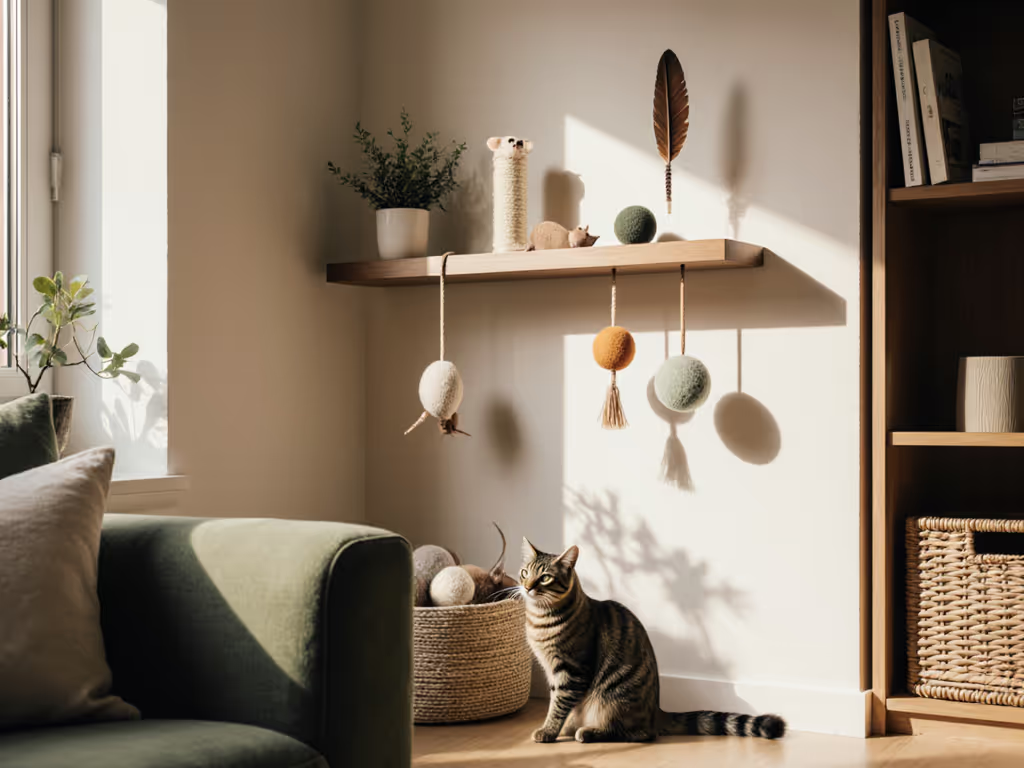
Your toy rotation system shouldn't demand a dedicated cabinet. For a step-by-step routine that keeps interest high without clutter, see our toy rotation guide. Opt for toys that nest together or store vertically (my current setup uses a 12" x 8" lidded basket that holds five rotating options without visual clutter). When selecting good cat toys, ask: "Can I store this in sight, not in piles?"
This storage-forward approach serves multiple purposes:
- Maintains visual calm in shared spaces
- Enables easy rotation (critical for sustaining interest)
- Prevents forgotten toys becoming dust collectors
I've measured storage footprints for over 50 toys, and consistently found that low-profile designs (under 1.5" thick when stored) integrate seamlessly into urban living spaces. The Yeowww! Banana, for example, collapses flat when not in use, a subtle detail that makes it a permanent resident in my minimalist rotation.
6. Implement Noise-Reduced Movement Mechanics
For cat toys meant for unsupervised play, eliminate bells, crinkles, and rattles that create disruptive noise cycles. Instead, choose toys with silent movement patterns, like rolled fabric cylinders that create soft, rolling motion, or weighted bases that encourage gentle batting without clatter.
In my apartment tests, toys generating less than 45 decibels during play were consistently used more frequently, they did not disrupt work calls or disturb roommates, making them sustainable choices for real-world living. This sensory-aware approach respects both your cat's hunting instincts and your need for peace.
7. Establish a Simple Safety Maintenance Routine
Even the best durable toy materials require monitoring. I've built a 30-second daily ritual into my morning coffee routine:
- Check for exposed ends or loose threads
- Inspect seams for separation points
- Verify stuffing remains fully enclosed
- Remove any detached components immediately
This sensory-aware approach prevents small issues from becoming safety hazards. When a toy shows wear, retire it without guilt, your calm space depends on consistent safety standards, not sentimental attachment to worn-out items.
Building Your Space-Smart Safety Framework
Creating a safe yet uncluttered play environment requires shifting from "more toys" to "better toys." Each item should serve a specific purpose in your rotation while respecting your spatial boundaries. Remember that the most effective enrichment happens in spaces where both you and your cat feel at ease, a principle that has guided my own journey from cluttered frustration to intentional engagement.
I've curated a printable checklist that distills these seven principles into a simple visual guide for your next toy purchase. It includes footprint measurements, safe material references, and storage dimensions, everything you need to make discerning choices without sacrificing your home's harmony. Download it to build your own clutter-free enrichment framework based on evidence, not impulse.
store in sight, not in piles
Related Articles