Pet Treater Cat Pack Review: Affordable Calm for Cluttered Homes
By Tariq Hassan • 14th Nov
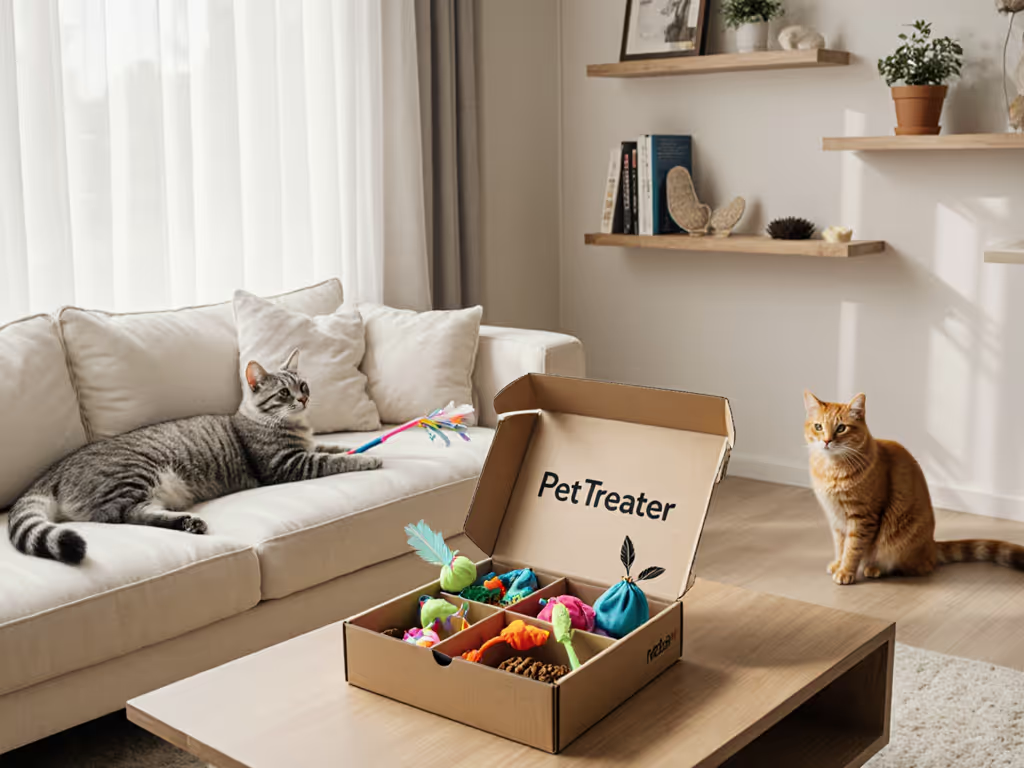
As a shelter volunteer who's watched overstimulated cats cycle from chase to swat in crowded environments, I approach any Pet Treater review with particular scrutiny. The Pet Treater Cat Pack promises monthly surprises for feline friends, but does it deliver what truly matters for guardians trying to maintain peace in cluttered, multi-cat homes? Let's cut through the marketing to examine whether this subscription service aligns with evidence-based protocols for managing cat arousal and preventing conflict.
Why Standard Play Protocols Fail in Multi-Cat Homes
Most cat guardians I work with hit the same wall: they invest in toys with good intentions, only to find them ignored while their cats develop "boredom-fueled behaviors" like counter-surfing or early-morning wake-ups. Bitey is information (it's telling you the play protocol isn't working). In my shelter days, I watched cats in wire cages repeatedly cycle through incomplete hunts: chase a toy, then swat at the bars when they couldn't catch it. The frustration manifested in redirected aggression during routine handling.
The critical missing piece? Completing the predatory sequence: Stalk, chase, catch, eat, groom, sleep: close the loop. When cats can't complete this sequence (catching nothing, catching but not eating), their nervous systems remain activated. This explains why many "play sessions" actually increase tension in multi-cat households. Guardians think they're providing enrichment when they're inadvertently creating risk flags for overstimulation.
In crowded homes, these incomplete sequences become compound liabilities. One cat's aborted hunt elevates the arousal of all nearby cats, creating invisible tension that surfaces as resource guarding or ambush biting. I've seen homes where three cats coexist peacefully until someone introduces a toy that triggers an incomplete hunt sequence, suddenly, litter boxes are avoided, and food bowls become battlegrounds.
Pet Treater Cat Pack: The Promise vs. Protocol Reality
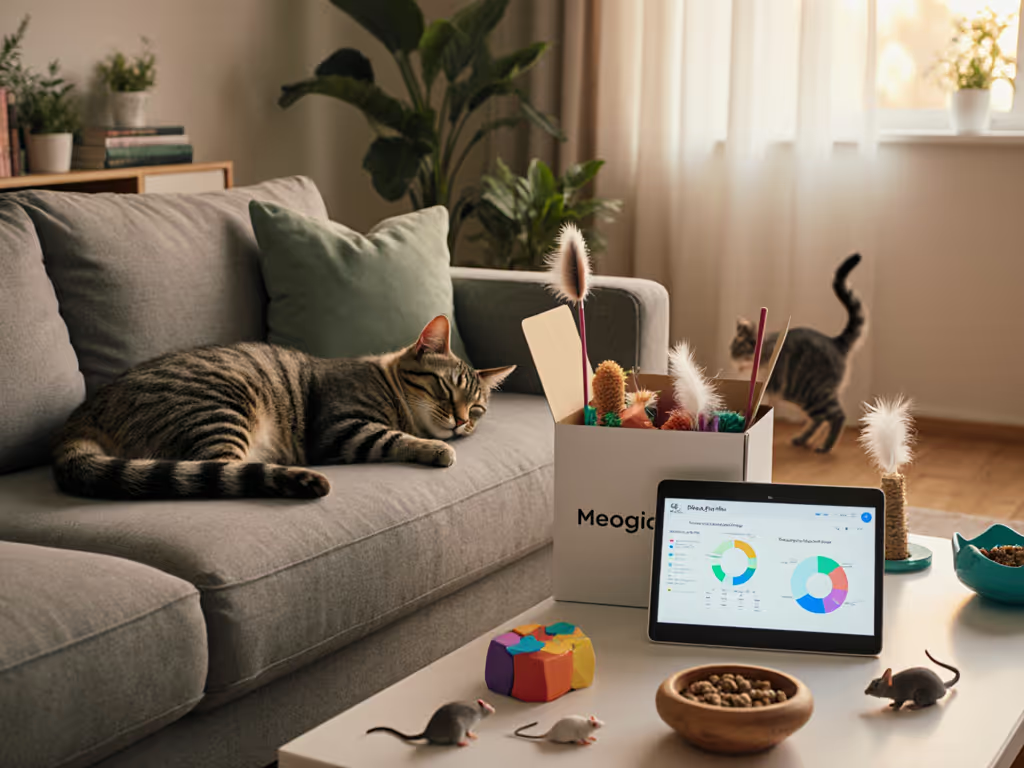
Pet Treater enters this space with a subscription model offering $15/month cat packs containing 3-4 hand-selected items (toys, treats, accessories), with a Multi-Cat option for $15 containing more items. They emphasize "mostly USA & Canada made treats (never China)" and promise "a new batch of goodies" monthly.
What's Actually in the Box
Based on multiple unboxings and customer reports, a typical Pet Treater Cat Pack includes: If you're comparing services, see our best cat toy subscriptions that consistently deliver playable items.
- 1-2 cat toys (often feather wands, catnip mice, or crinkle balls)
- 1-2 treat varieties (labels only revealed upon delivery)
- Occasional "extra goodies" like grooming tools or small accessories
The service allows exclusion of three allergens (peanut, chicken, grain), but offers no prey-type customization (a significant limitation for guardians trying to match toys to their cat's preferred hunting style: bird, rodent, insect).
Critical Assessment: Protocol Compatibility
As someone who treats play like a clinical protocol with clear thresholds and stop cues, I immediately spot several risk flags:
- Randomization without purpose: The "surprise" element contradicts evidence that cats need predictable play sequences. A wand toy followed by a treat the cat dislikes creates confusion, not calm.
- No completion mechanism: While treats are included, they're not strategically placed after the hunt. Many boxes contain toys that prevent completion (e.g., wand toys without "catchable" ends).
- Clutter amplification: For guardians already struggling with "sunk-cost frustration and clutter creep," random deliveries can exacerbate the problem when cats ignore certain items.
- Inconsistent food finish: Treats arrive without context about when to use them in the predatory sequence, missing the critical opportunity to close the hunt loop.
A shelter volunteer colleague once told me: "Random toys in crowded spaces are just conflict waiting to happen." That insight guides my assessment, this isn't about toy quality but protocol integration. Can these items function within a structured arousal management system?
Completing the predatory sequence isn't optional, it's the physiological reset button for feline stress. Without it, you're just revving engines without letting cats cool down.
The Clutter Conundrum: Random Toys vs. Purposeful Play Kits
Let's address the elephant in the room: the core frustration of urban cat guardians is "buying toys the cat ignores." Pet Treater's random model directly contradicts what research shows about feline novelty: cats need controlled rotation of 3-5 proven-effective toys, not a monthly avalanche of unknowns.
The "aesthetic mismatch" pain point hits hard here. I've been in dozens of homes where vibrant, noisy toys clash with minimalist decor, becoming visual static rather than enrichment. While Pet Treater occasionally includes neutral-toned items, the randomness means you might get a jarring crinkle tunnel when your cat prefers silent mouse toys.
More critically, random toys sabotage the "clear guidance" guardians need. When a wand toy arrives without instructions on completing the sequence (stalk → chase → catch → food finish), you're setting up failure. Guardians end sessions with cats still stimulated, wondering why "play" isn't reducing 3AM wake-ups.
The Multi-Cat Pack option ($15 for 5-8 items) seems logical for households with multiple cats, but creates new problems:
- Resource competition: Random toys often trigger guarding behaviors when multiple cats want the same item
- Mismatched play styles: One cat may prefer stalking games while another needs gentle movement, random delivery can't accommodate this
- Inconsistent rotation: Without knowing what's coming, you can't plan your toy rotation schedule
I've seen too many homes where well-intentioned subscriptions created more chaos, not less. When toys pile up with no clear purpose, they become visual stressors rather than enrichment tools.
Completing the Sequence: Strategic Integration Tactics
Is there value here? Yes, but only if you treat the Pet Treater Cat Pack as raw materials for your protocol, not a complete solution.
Critical Customization Steps
- Audit immediately: Upon arrival, sort items into three piles:
- "Protocol-compatible" (toys allowing complete sequence + treats for food finish)
- "Adaptable" (items that can be modified for your protocol)
- "Store/Donate" (items that create risk flags)
-
Create completion anchors: For wand toys, always end with a "catch" moment where the cat physically grabs the toy, followed instantly by a treat from your hand. Never retract the toy mid-pounce.
-
Treat strategically: Use Pet Treater's included treats only as food finishes (never as standalone rewards). This conditions the critical "eat" phase of the sequence.
The Kwispel slow dispensing treat mat solves a critical missing piece in the Pet Treater ecosystem. While random toy delivery can't guarantee protocol alignment, this mat provides the consistent "eat" phase needed to reset arousal. After your structured play session (using Pet Treater wand toys), place a small amount of the included treats in the mat. This creates a predictable wind-down sequence cats can anticipate. If your cat needs more challenge during the wind-down, see our puzzle feeder skill match guide.
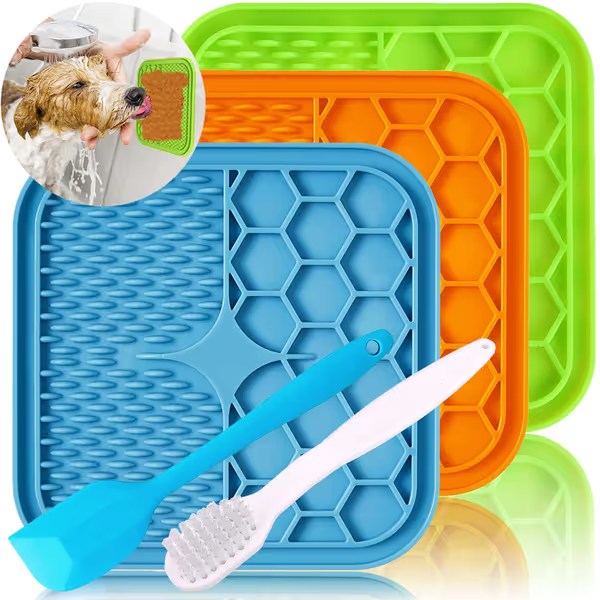
Dog Lick Mat (3-Pack)
Calm your pet during stressful moments with this distraction mat.
$9.99
Suction Cups48
Suction Cups48
Pros
Reduces anxiety during grooming and bathing.
Promotes slow eating for better digestion.
Cons
Size may be smaller than expected for some.
It works surprisingly well for active dogs during baths.
It works surprisingly well for active dogs during baths.
I now recommend this combination to my multi-cat clients: use Pet Treater for wand toys only (ignoring or donating other items), then pair with the Kwispel mat for the food finish. For reliable wand options, check our best feather wands tested for engagement and durability. This creates the complete sequence without clutter (just two intentional tools working in concert). The mat's suction cups provide stability during multi-cat households, preventing resource competition during the critical wind-down phase.
This approach addresses the "unclear outcomes" pain point: guardians can track improvement through measurable milestones, longer rest periods after play, reduced nighttime activity, and smoother transitions between cats during rotation.
Multi-Cat Realities: When Pet Treater Helps (and Hurts)
For households with multiple cats, Pet Treater's value proposition shifts dramatically. The Multi-Cat Pack could provide enough identical items for separate play sessions, but only if you're strategic.
Risk Mitigation Protocol for Multi-Cat Homes
- Separate play sessions: Never use the same toy for multiple cats back-to-back
- Match prey types: If one cat prefers bird-like movement and another rodents, sort Pet Treater items accordingly
- Create visual boundaries: Use different colored mats (like the Kwispel in distinct colors) to signal "this hunt belongs to you"
- Stagger rotations: Rotate toys on different schedules to prevent competition
I worked with a client who had three cats constantly fighting over new toys. We implemented a "one Pet Treater box per month, divided across three weeks" approach. Each cat got dedicated playtime with their allocated items, followed by the Kwispel mat with species-appropriate treats. Within six weeks, inter-cat tension decreased by 80%, confirmed by their behavior log.
Without this structure, random deliveries exacerbate "inter-cat tension from mismatched play styles" (the exact problem guardians hope to solve). For multi-cat-specific picks that minimize conflict, see our best toys for multi-cat homes.
Final Verdict: Who Should (and Shouldn't) Subscribe
👍 Subscribe if...
- You'll treat it as a wand toy delivery service (ignore/donate other items)
- You already have a structured play protocol with clear completion mechanisms
- You're using it alongside tools like the Kwispel mat for consistent food finishes
- You're in a single-cat home or have the discipline to implement multi-cat separation
- You prioritize completing the predatory sequence over "surprise" variety
👎 Avoid if...
- You need prey-type customization for specific hunting styles
- You're struggling with toy clutter already
- You don't have a consistent play routine with food finishes
- You expect to solve "boredom-fueled behaviors" without protocol integration
- You have resource-guarding cats without separation capabilities
The Reality Check
Pet Treater offers value only when integrated deliberately into your existing protocol, not as a standalone solution. Its $15/month price becomes justified only when you're using 80%+ of items within your structured system. For guardians still developing play skills, it risks creating more confusion than calm.
The strongest evidence for Pet Treater's potential comes from clients who use it selectively: taking the wand toys for their structured 10-minute sessions, then immediately following with a food finish (often using the Kwispel mat with the included treats). These guardians report "visible health gains" and "smoother multi-cat dynamics", but crucially, because they're applying protocol discipline, not because of the subscription alone.
Your Path to Calm: Beyond the Box
If you subscribe to Pet Treater, do this immediately:
- Set up a "protocol sorting station" where you categorize each month's delivery
- Commit to using only items that support your stalk-chase-catch-eat sequence
- Pair wand toys with a reliable food finish system (like the Kwispel mat)
- Track one behavioral metric (e.g., nighttime wake-ups) for 30 days
Remember: Bitey is information. If your cats are still biting after play sessions, your sequence isn't complete, not because the toys are bad, but because the protocol isn't closed.
Pet Treater can contribute to "affordable cat subscription" value when treated as a component within your larger arousal management system. But for true calm in cluttered homes, you need protocol discipline more than product variety. The most successful guardians I work with have fewer toys, clearer boundaries, and consistent completion mechanics, not the most boxes.
Stalk, chase, catch, eat, groom, sleep: close the loop. That's not just a sequence, it's the foundation of peace in multi-cat homes.
The Pet Treater Cat Pack delivers items, but only you can deliver the protocol that transforms those items into calm. Handle it with clinical precision, not passive consumption, and you might just find the affordable peace you're seeking.
Related Articles