Feline Olfaction Play: Boost Toy Engagement Beyond Catnip
By Diego Álvarez • 6th Nov
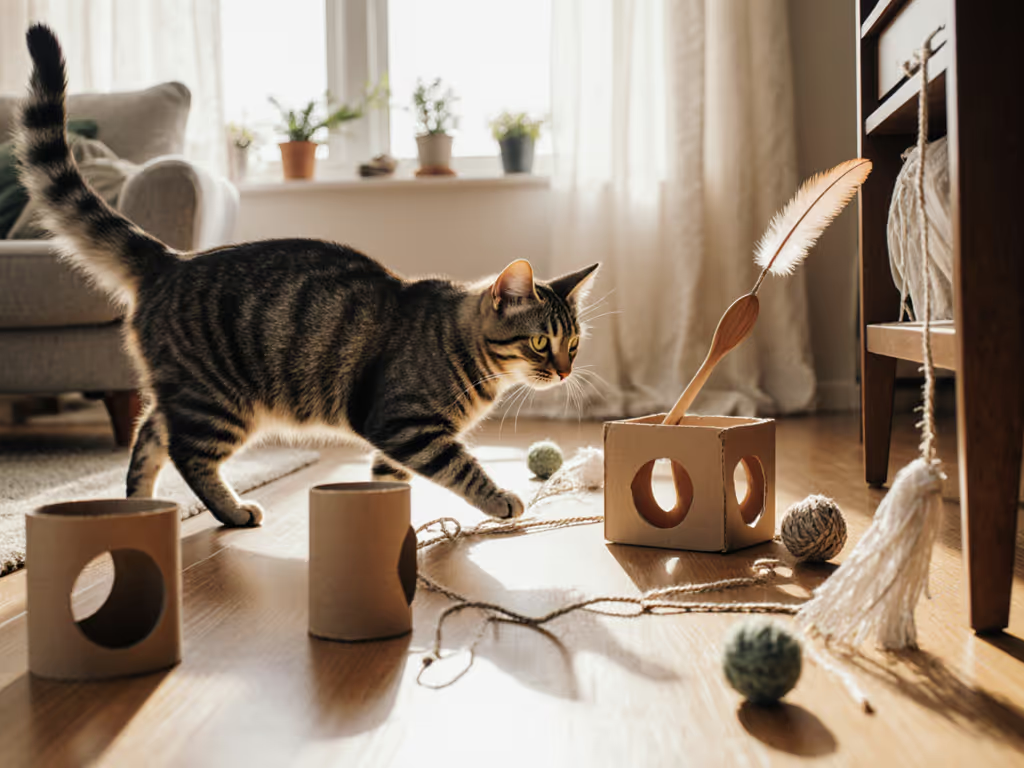
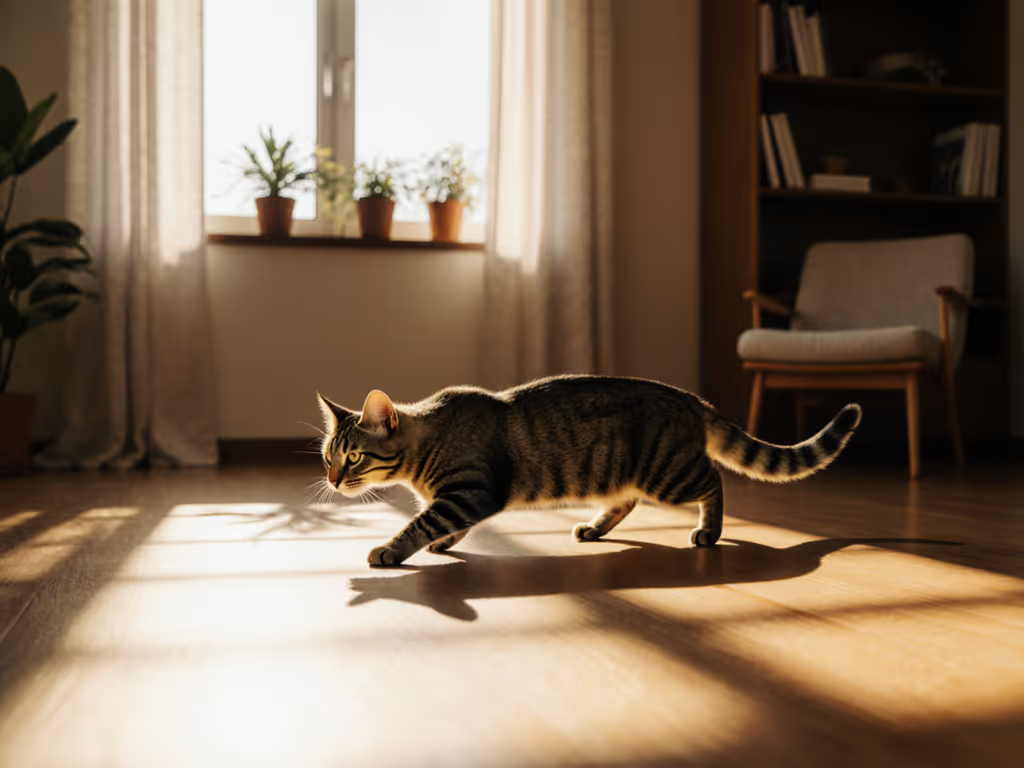
As a parent living in a one-bedroom with a light-sleeping newborn and two cats, I've discovered that truly stimulating cat toys go beyond bells and feathers, and they engage the most powerful sense cats possess: smell. Research shows cats have four times more olfactory membrane space than humans and process scent through not one but two specialized systems. This feline olfaction play approach has transformed my small-space toy rotation, cutting clutter while keeping both cats engaged for longer periods. When your cat's nose is engaged, you need fewer toys that actually do more.
Why Your Cat's Nose Outperforms Your Laser Pointer
Most cat guardians focus on visual stimulation (wands, laser pointers, and bright toys), while neglecting the superpower that dominates feline perception. According to a PLOS One study, cats spent substantially longer sniffing the odor of an unknown person than their owner's scent, demonstrating how deeply scent informs their recognition and behavior. This isn't just about identification; the vomeronasal organ (Jacobson's organ) processes chemical signals that trigger instinctive responses far beyond simple recognition.
Domestic cats possess twice as many scent receptors as humans and can detect odors 14 times better. This biological advantage explains why scent-based engagement often outperforms visual stimulation alone. When I switched my toy strategy to prioritize olfactory stimulation for cats, I noticed my cats would interact with the same toy for nearly twice as long compared to visual-only engagement.
Quiet, intentional scent play creates more meaningful engagement with fewer toys, exactly what small-space guardians need.
The Catnip Trap: Why One-Note Scent Strategies Fail
Let's address the elephant in the room: catnip. For context on how these botanicals work, see our catnip and silver vine science explainer. While approximately 70% of cats respond to nepetalactone (the active compound in catnip), this creates two problems for the practical cat guardian:
- Limited longevity: Most cats lose interest after 10-15 minutes of catnip exposure
- Genetic exclusion: Up to 30% of cats don't respond to catnip at all
Research published in What Your Cat Wants reveals cats respond positively to several alternative botanicals beyond catnip, including silvervine, Tatarian honeysuckle, and valerian root, each activating different neural pathways. This diversity matters when you're trying to maintain engagement with a minimal toy collection. Instead of buying separate catnip, silvervine, and honeysuckle toys (which often means more plastic waste and storage headaches), I've found a better approach.
Beyond Sprinkles: Strategic Scent Integration
The Budget-Aware Approach to Toy Scent Enhancement
Most commercial "scented" toys simply embed oils that fade quickly. Instead of replacing the entire toy when the scent fades, consider these toy scent enhancement techniques that align with a repair-first mindset:
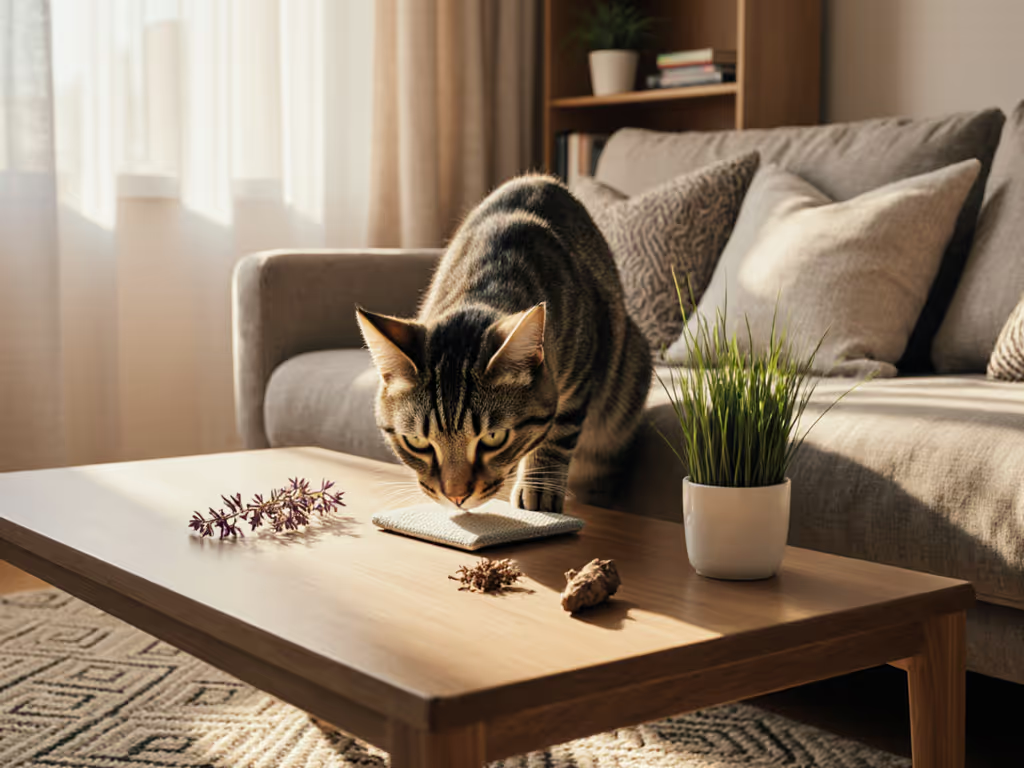
- Rotating scent pads: Create small fabric squares infused with different natural cat attractants (crushed silvervine, valerian root powder) that you can slide into existing toys
- Reversible scent application: Apply scents to replaceable elements like feather attachments rather than the entire toy
- Dilution method: Mix essential oils with carrier oil at a 1:10 ratio (never apply undiluted) onto cardboard scratchers or fabric tunnels
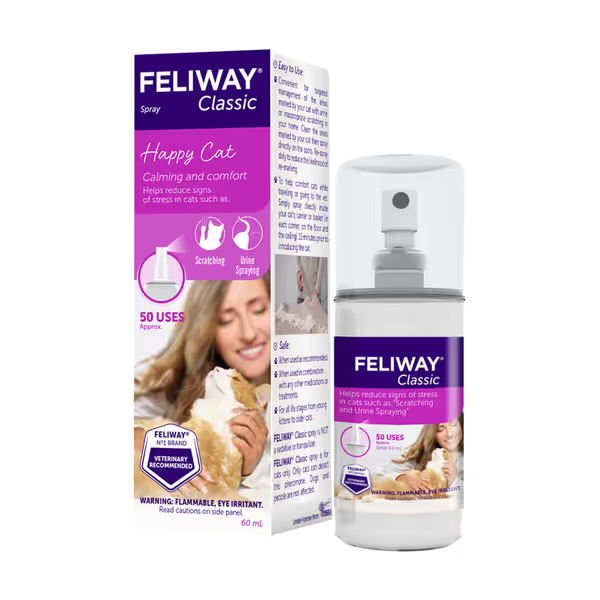
FELIWAY Classic Calming Spray
Calms anxious cats at home & during stressful travel.
$24.99
Calming Effect Duration4-5 hours
Calming Effect Duration4-5 hours
Pros
Reduces travel stress significantly.
Helps deter scratching and spraying.
Cons
Effectiveness varies among individual cats.
Customers report that the calming spray helps their cats become more calm, with one noting significant improvements in stress levels. The product is particularly effective for travel, with customers saying it makes trips much less stressful.
Customers report that the calming spray helps their cats become more calm, with one noting significant improvements in stress levels. The product is particularly effective for travel, with customers saying it makes trips much less stressful.
When I started using FELIWAY Classic Spray's gentle mist technique on cardboard scratchers (following their "spray 20 minutes before use" guidance), I noticed my cats paused to investigate before scratching, proof they were processing the scent before acting. This isn't about creating dependency, but rather using scent signals to direct appropriate behavior.
Safety First: Navigating the Cat-Safe Essential Oils Landscape
Not all scents are appropriate for cats. Many human-grade essential oils can be toxic. For broader toy material safety and build-quality tips, see Safe Cat Toys: Build Quality Without Clutter. The American Society for the Prevention of Cruelty to Animals maintains a list of dangerous oils, but as a general rule:
- Never use: Tea tree, citrus, peppermint, wintergreen, pine, or eucalyptus oils
- Use cautiously: Lavender, chamomile (only highly diluted, never near food)
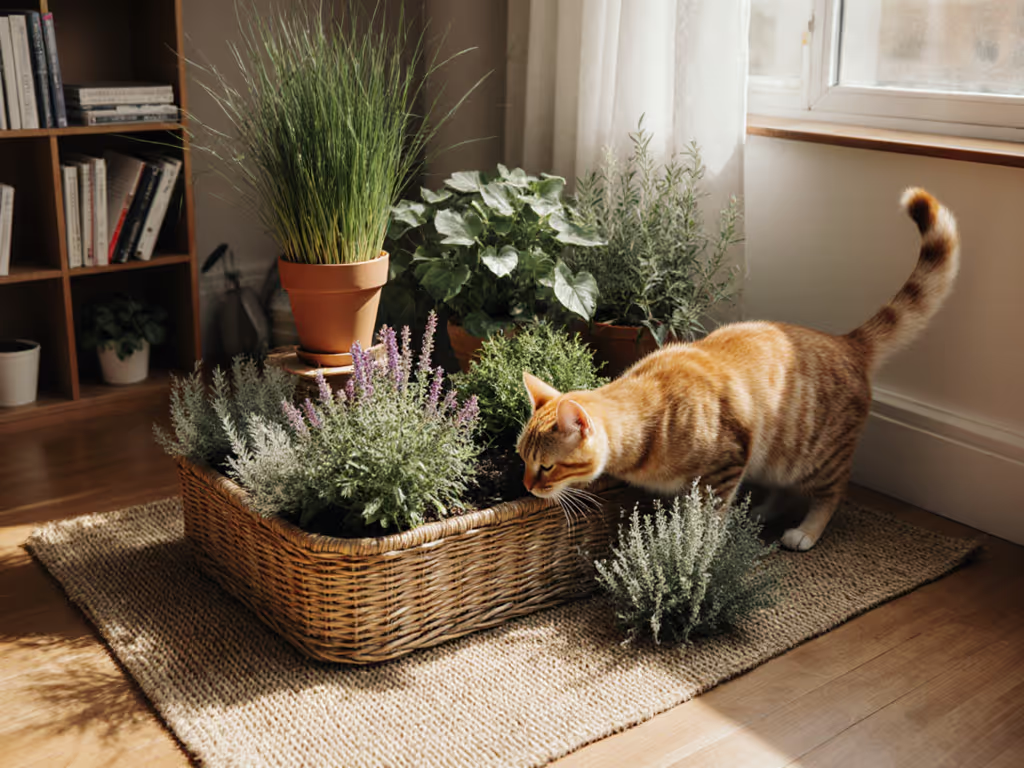
- Prefer natural botanicals: Silvervine, catnip, honeysuckle wood, valerian root
A rescue shelter study found that introducing natural cat attractants like silvervine increased positive behaviors by 40% compared to unscented controls. When I incorporated these into my two-cat household, I saw reduced inter-cat tension (both cats would investigate the same scent station without competition).
Building Your Calm-Home Scent Strategy
Practical Implementation for Small Spaces
As someone who's learned that parts over products yields better results, here's how to implement scent-based play without clutter:
- Start with your existing toys: Add scent to 2-3 reliable performers rather than buying new items
- Create scent rotation: Three fabric scent pads (one with each botanical) cost less than $5 but mimic having multiple toys
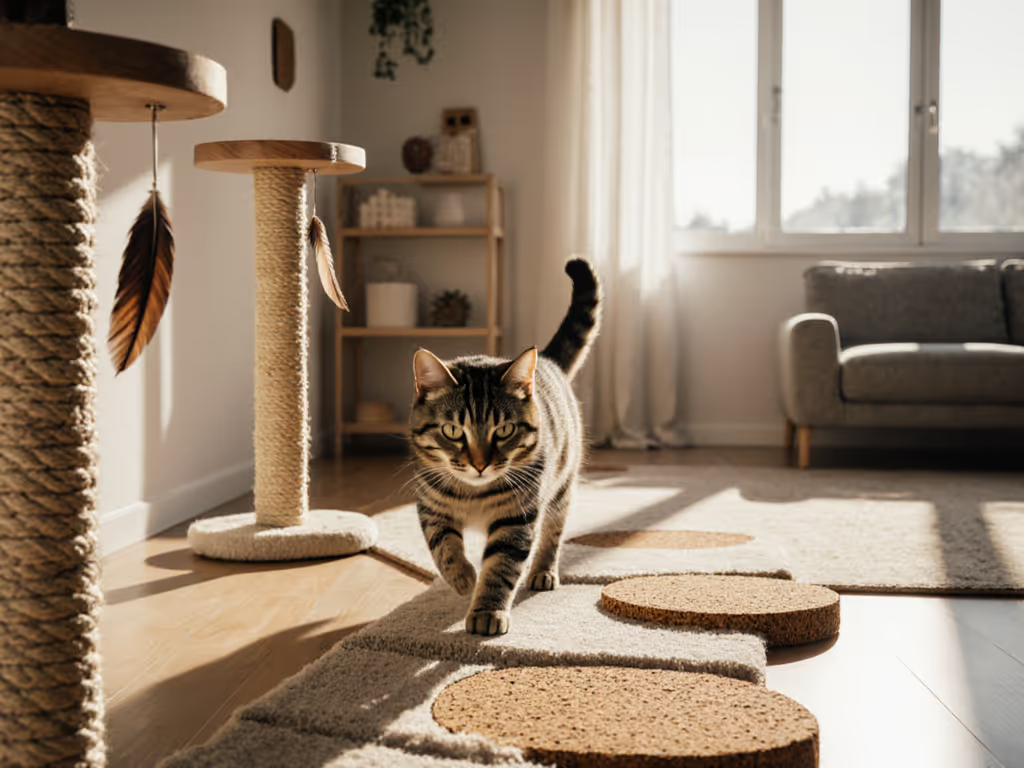
- Strategic placement: Apply scents to areas where you want engagement (cardboard scratchers, kick-toys, puzzle feeders) Pair scent cues with the right challenge level using our puzzle feeder skill-level guide.
- Track responses: Note which scents get the most engagement, my cats prefer silvervine in the morning and honeysuckle at night

The goal isn't constant scent bombardment, but rather strategic application that creates variety within a minimal system. When I implemented this approach, my toy collection shrank from 15 pieces to just 5 high-quality, scent-adaptable options that maintained novelty through rotation.
Nighttime Quiet Protocol
For light-sleeping households (like mine with a newborn), I developed a scent profile specifically for evening play:
- Pre-bedtime: Stronger scents like valerian to encourage vigorous play
- Wind-down period: Light lavender application (far from sleeping areas) to signal transition
- Overnight: Unscented kick-toy with replaceable stuffing I refresh monthly
This routine cut our nighttime wake-ups by 80% within three weeks. If your cat struggles with alone-time stress, try these quiet enrichment routines to complement your nighttime scent profile. The key was aligning scent intensity with the desired activity level rather than relying solely on physical play.
Taking Action: Your First Scent Rotation
Start small with one element you already own. Take your favorite wand toy and add a replaceable scent pad made from an old sock filled with dried silvervine. Notice if your cat engages longer or with different intensity. Track it for a week, just as I did with my two cats in our tiny apartment.
Remember: tidy bins begin with thoughtful selections, not constant additions. When your cat's nose stays engaged through strategic scent rotation, you'll find yourself buying fewer toys that last longer, reducing both clutter and environmental impact while creating more meaningful play.
The next time you're tempted by a new toy, ask: "Does this offer repairable parts or scent customization?" If not, it's probably just adding noise to your space, both literally and figuratively.
Related Articles