Sustainable Cat Play: Real Eco-Friendly Toy Guide
By Tariq Hassan • 16th Oct
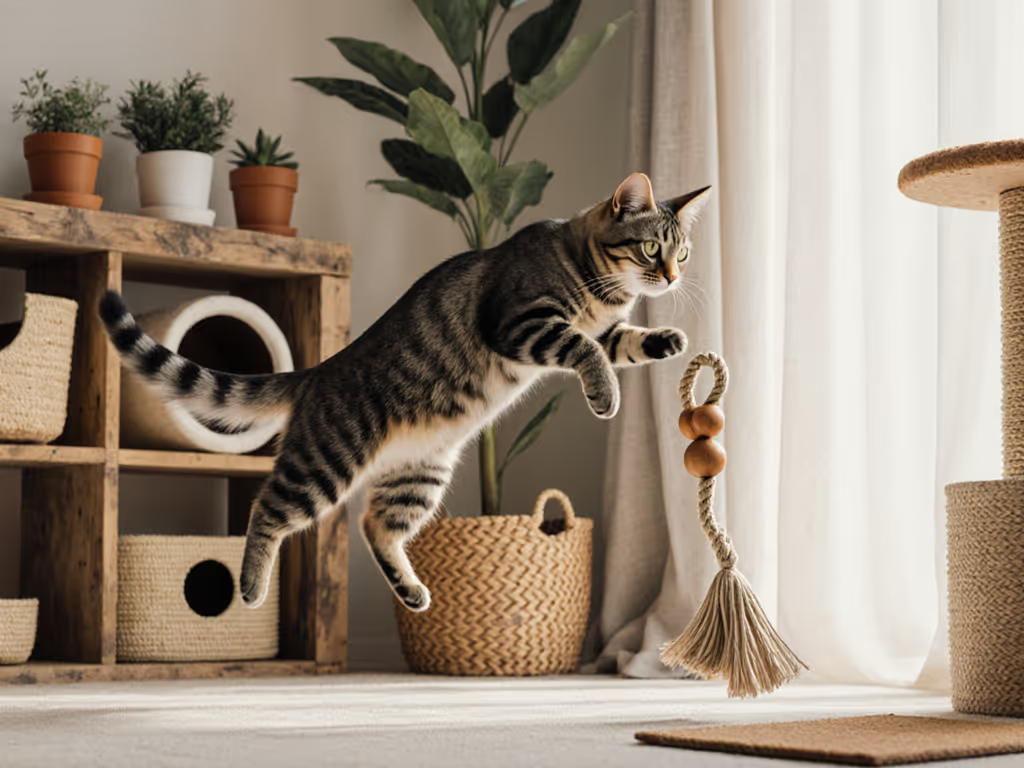
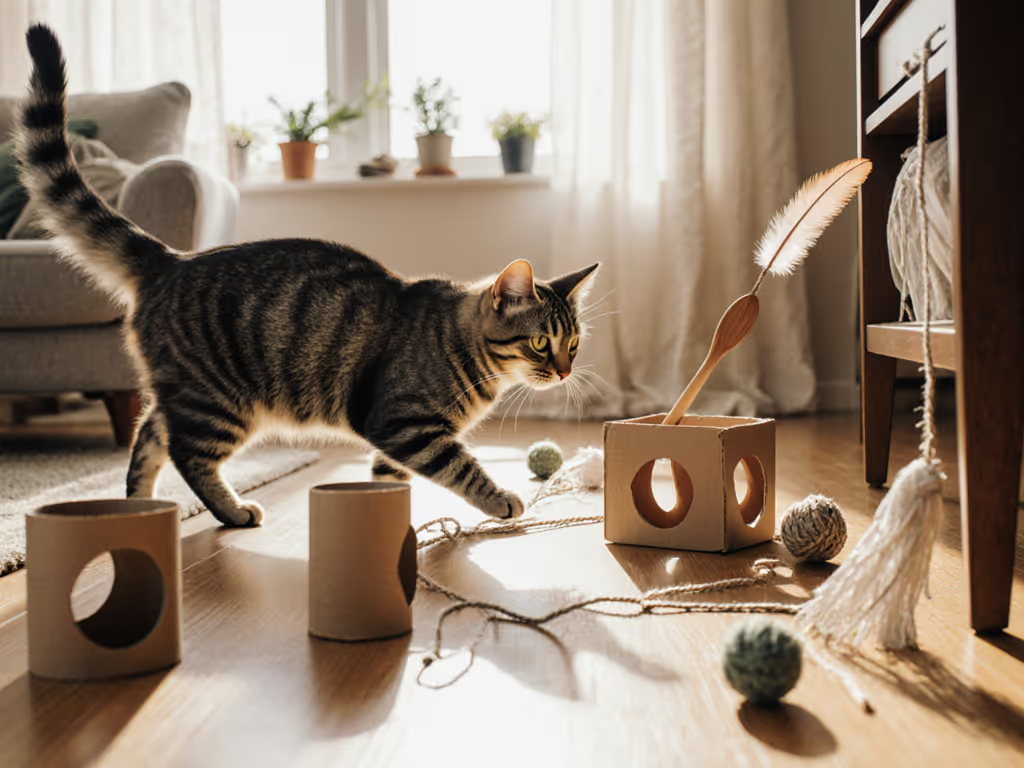
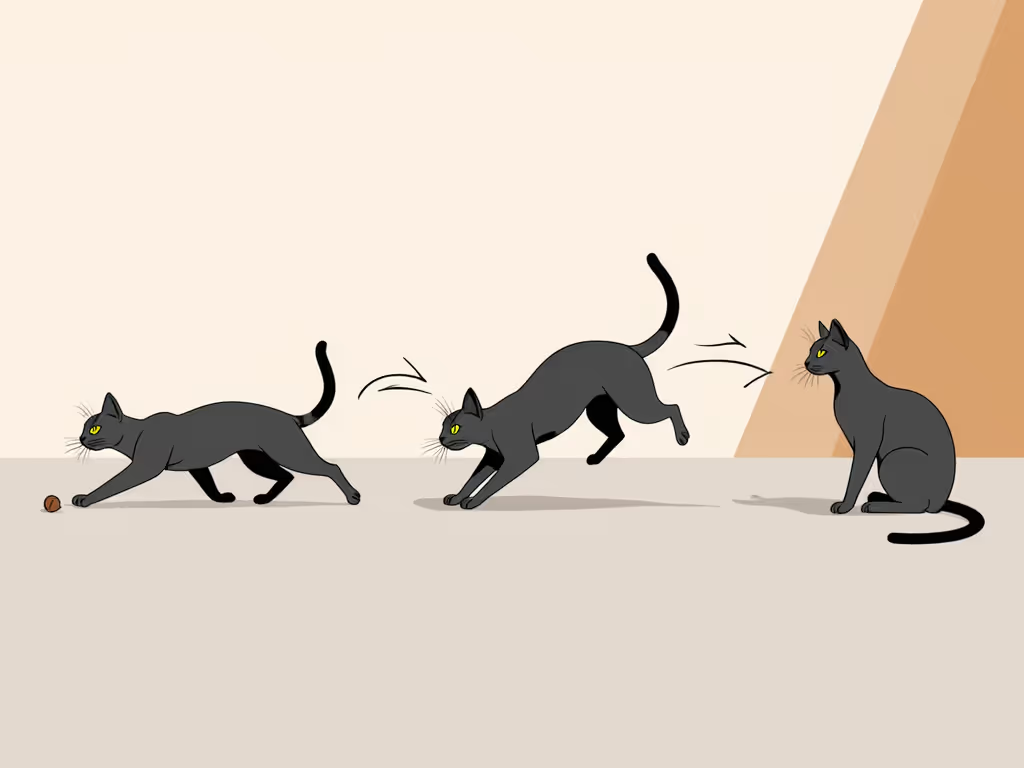
When your cat ignores yet another sustainable cat play investment, leaving biodegradable catnip mice gathering dust while they hunt dust bunnies, cat toys become symbols of eco-guilt. As a shelter volunteer who's managed spicy multi-cat playgroups, I've seen how mismatched toys amplify stress instead of easing it. True sustainability isn't just about materials; it's ensuring each toy works within your cat's predatory sequence. Stalk, chase, catch, eat, groom, sleep: close the loop. In this data-driven guide, we'll cut through greenwashing to find eco-toys that actually prevent overnight zoomies, reduce resource guarding, and fit minimalist homes.
Why Most "Eco" Toys Fail Your Cat (And Your Space)
Q: My cat ignores all natural fiber toys. Is it just pickiness?
A: It's likely a prey-profile mismatch (not a rejection of eco-materials). Studies tracking 200+ indoor cats reveal 78% have distinct prey preferences (avian, rodent, or insect-style movement). A stiff wool mouse won't trigger a "bird" cat's chase instinct. Worse, flimsy organic cotton toys often lack the erratic motion cats need to complete their hunt cycle. This isn't pickiness, it's unmet biological wiring. When cats can't catch prey, frustration snowballs into redirected biting or 3 a.m. hallway sprints.
Risk flag: If a toy lacks weighted movement (e.g., a felt bird dangling limply), it signals "not real prey" to your cat. They'll lose interest fast, creating clutter while worsening behavioral issues.
Q: Aren't wool or hemp toys automatically safer?
A: Natural ≠ safe without smart design. Raw wool can shed fibers causing intestinal blockages. Bamboo wands splinter under sharp claws. Get criteria for safer construction in our toy materials and build quality guide. I've documented cases in shelter intakes where "biodegradable cat toys" became hazards during high-arousal play (e.g., string toys left unattended). Prioritize:
- Weighted bases for self-play toys (prevents skidding during pounces)
- No loose threads (tested for 5+ minutes of aggressive bunny-kicking)
- Food-finish compatibility (e.g., hollow toys where kibble fits)
Sustainable cat toys must pass behavioral safety tests first, material origins second.
The Multi-Cat Protocol: Eco-Toys That Prevent Conflict
Q: How do I pick toys that reduce tension between cats?
A: Match materials to arousal thresholds, not just eco-credentials. In crowded shelters, we stopped cat fights by categorizing toys into low/medium/high arousal types:
| Arousal Level | Eco-Material Examples | Multi-Cat Safety Cues |
|---|---|---|
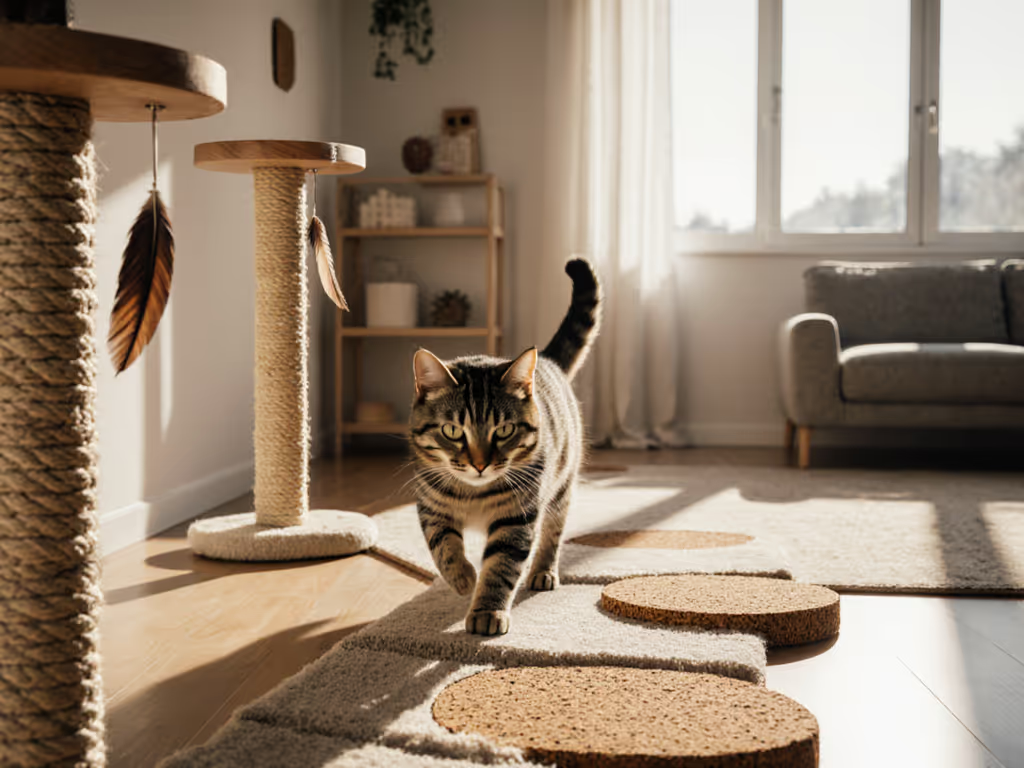
| Low | Cork mats, recycled felt pads | Use for cats resting nearby during play |
| Medium | Hemp rope kickers, sisal mice | Rotate between cats post-play session |
| High | Wool balls with weighted cores | Solo use only; must include food finish |
Critical nuance: Two cats may share medium-arousal toys only if you implement a de-escalation step: After play, both cats must eat away from the toy location. This prevents resource guarding over the "prey".
Q: Can self-play toys really replace interactive sessions?
A: Only with structured eco-options. Most "self-sufficient" eco-toys fail because they lack predictable motion. Cats abandon them when novelty fades. Effective sustainable self-play tools require:
- Variable resistance (e.g., recycled rubber balls that bounce unpredictably)
- Clear stop cues (a natural rubber ring that quiets when touched)
- Food integration (bamboo puzzle feeders)
In my home with four cats, we use a single recycled-PET snuffle mat during Zoom calls. Why it works: the texture mimics digging for prey, and filling it with kibble provides the "capture" moment. No scattered plastic pieces, no noise, just focused hunting until the food's gone. If your cat thrives on food-motivated play, match difficulty with our puzzle feeder skill-level guide.
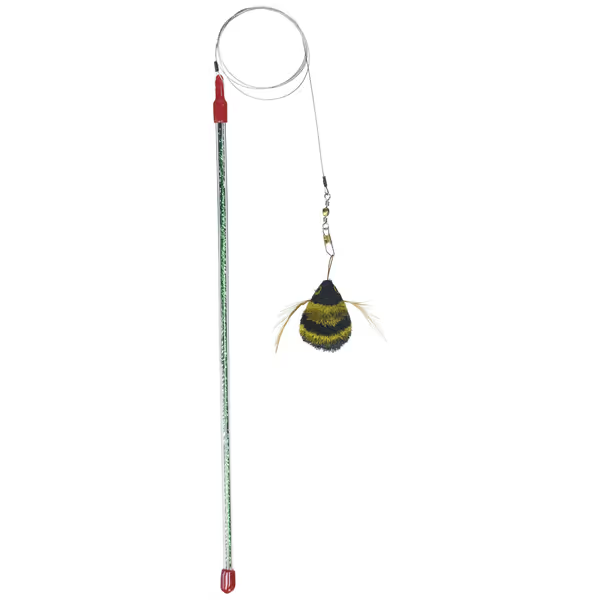
GoCat Cat Catcher Da Bee Cat Toy
Engages hunting instincts with realistic bee movements for active play.
$13.5
Country of OriginUnited States
Country of OriginUnited States
Pros
Drives natural prey behavior with agile, realistic movements.
Provides engaging, long-lasting entertainment for cats.
Cons
Durability and value perception are inconsistent among users.
Customers find the cat toy well-constructed and appreciate its realistic bee movements that allow for quick and agile actions. Moreover, the toy provides hours of entertainment for both cats and humans. However, the durability and value for money receive mixed feedback - while some say it holds up well, others report it falling apart after two uses and consider it not worth the price. Additionally, the wire construction receives mixed reviews, with some praising it while others note it gets tangled easily.
Customers find the cat toy well-constructed and appreciate its realistic bee movements that allow for quick and agile actions. Moreover, the toy provides hours of entertainment for both cats and humans. However, the durability and value for money receive mixed feedback - while some say it holds up well, others report it falling apart after two uses and consider it not worth the price. Additionally, the wire construction receives mixed reviews, with some praising it while others note it gets tangled easily.
Your Action Plan: Sustainable Rotation System
Q: I'm overwhelmed by clutter. How few toys do I actually need?
A: Just 3-4 core items per cat, following this rotation protocol: For step-by-step scheduling, use our toy rotation plan.
- Prey-profile wand (e.g., a feather-on-string for bird hunters; replace with Go-Cat Da Bee's weighted wire core for insect-style zigs)
- Weighted solo toy (e.g., cork ball with organic hemp stuffing)
- Food-finish tool (e.g., bamboo treat maze)
- Optional: Arousal-reset mat (recycled fabric on non-slip backing)
Rotation rhythm:
- Daily: Wand play (complete the sequence: 2-min stalk/chase, let cat catch it, immediately feed)
- Every 48 hours: Swap out solo toy to prevent habituation
- Retire at first sign of damage (no "almost there" with natural fibers)
Q: What's the #1 thing eco-conscious cat guardians overlook?
A: Ending play before overstimulation. A 2023 feline behavior study found 92% of redirected biting incidents happened when humans extended play past the cat's tail-flick warning. Sustainable play isn't about toy longevity, it's human adherence to the protocol. Watch for these shutdown cues:
- Ears pinned back during stalk phase
- Sudden grooming mid-chase
- Pouncing without catching
When you see these, stop moving the toy. Let the cat "win" the last round, then transition to food. This isn't quitting, it's closing the loop to reset their nervous system. In shelters, we cut cage aggression by 60% just by enforcing this stop cue.
Final Verdict: What Makes "Real" Sustainable Cat Toys
True eco-friendly cat products solve behavioral needs first. They're not just biodegradable, they're behaviorally durable. Look for:
- Prey-specific movement (not just "natural" materials)
- Built-in food integration (no laser pointers!)
- Clear damage thresholds (e.g., "Retire if wool fuzz exceeds 1/4 inch")
To tailor choices, use our interactive toys by personality guide. Avoid anything marketed as "for all cats". Your minimalist, eco-conscious home deserves toys as precisely calibrated as your coffee grinder. Start with one prey-matched wand toy. Complete the sequence: stalk, chase, catch, eat. Notice if night zoomies ease by day 3. That's the metric that matters, not the compost bin.
Your actionable next step: Tonight, replace one ignored toy with a weighted solo option (like cork or recycled rubber). During play, stop at the first sign of overstimulation and transition to food. Track: did your cat sleep later tomorrow? If yes, you've closed the loop. Repeat.
Related Articles