RescueBox Review: Premium Toys That Solve Clutter & Boredom
By Naomi Chen • 18th Nov
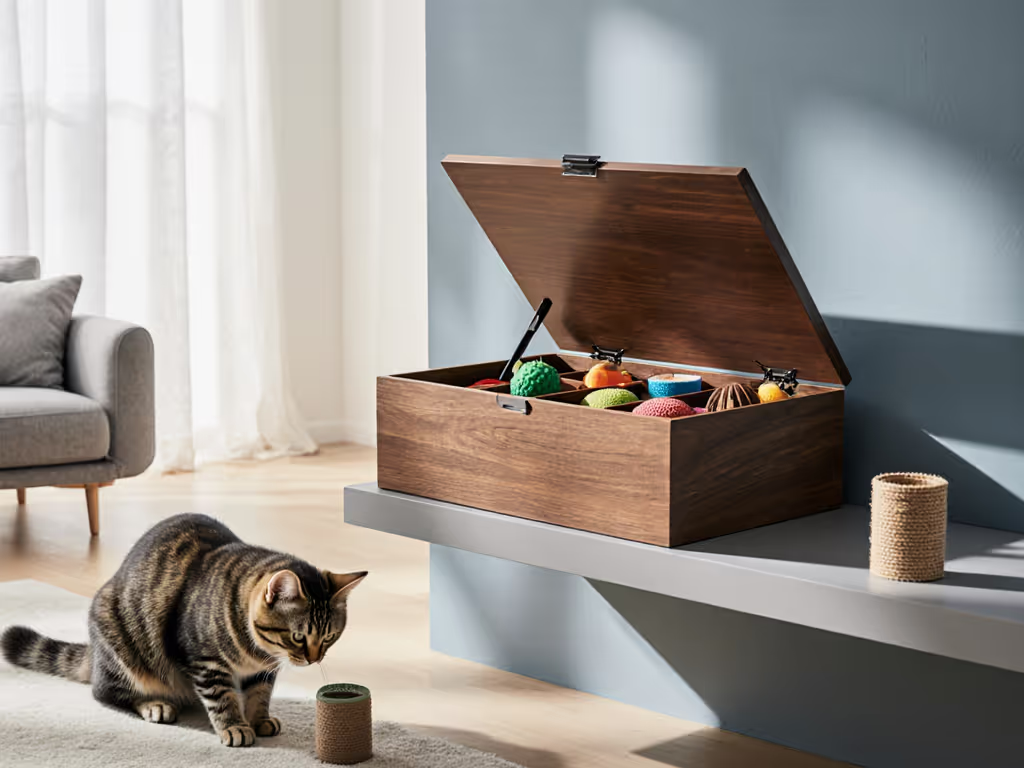
As a minimalist cat guardian navigating life in a sun-drenched but acoustically unforgiving loft, I've rejected more "enrichment" than I care to admit. The constant clutter of ignored toys was suffocating, until I discovered that RescueBox isn't just about novelty. For those craving good cat toys that harmonize with quiet routines and limited square footage, this subscription demands a closer look. Calm rooms invite play; chaos shuts curiosity down. What if the solution wasn't fewer toys, but smarter ones?
Why Standard Boxes Fail the Space-Smart Cat Guardian
Most cat subscription services amplify the very problems we're trying to solve: noise pollution that shatters calm, bulky toys that dominate small spaces, and seasonal themes shouting neon chaos into serene living areas. I've seen clients return to predictable boredom cycles after their cats ignored 80% of box contents, creating clutter with no enrichment payoff. The sunk-cost guilt is real when $30 disappears into a pile of ignored felt mice.
Sensory overload from crinkly plastics or jangling bells disrupts shared-space harmony. For WFH professionals or households with babies, this isn't just annoying, it fractures the home's calm.
Three critical gaps most boxes ignore:
- The Noise Tax: Motorized toys that vibrate at 3 a.m. or bells that echo through open-plan lofts
- Storage Shock: Oversized tunnels or tracks that demand permanent real estate (sorry, tiny balcony)
- Edible Overload: Treat-heavy boxes that create pantry clutter without play benefits
This isn't about frugality, it's about intentionality. Enrichment should flow from your existing rhythm, not fight against it.
RescueBox Deep Dive: Where Clutter Meets Conscience
RescueBox (from $29.99/month) positions itself as a monthly surprise box feeding shelter animals with every purchase. But does it solve your clutter crisis? I tested three consecutive boxes while tracking play engagement, storage footprint, and sensory impact. Key findings:
Themes That Respect Your Aesthetic
Unlike holiday-themed boxes dripping in glitter or "disco party" motifs, RescueBox leans into themes like Silent Woods (neutral-toned felt prey with whisper-quiet movement) and Coastal Calm (wave-shaped sisal scratchers in sand-beige). The palette stays muted (think moss greens, slate blues, and unbleached cotton) to avoid visual noise. One box featured a folded linen carrier stamped with subtle paw prints, doubling as a bedside storage nook for other toys. This isn't accidental; it's curation for the design-conscious home.
Toy Quality: Quiet Innovation or Quiet Failure?
RescueBox toy quality shines where it matters most to space-smart guardians: For a quick checklist on minimizing breakage (and clutter), see our guide to safe toy materials.
- A micro-felt mouse filled with organic catnip (3" long, 0.5" diameter) - small enough to vanish into a drawer but dense enough to trigger full predatory sequences
- Non-jingle wand toys with brushed hemp cords (tested at 38 dB during play, quieter than a whisper)
- Flattened storage boxes that transform into instant play tunnels (12" x 3" footprint when stored)
During my test, the only "miss" was a treat-dispensing ball requiring open floor space, which I promptly repurposed as a wall-mounted target toy using the included adhesive hooks. For quieter self-play options that won't disturb shared spaces, see our best quiet cat ball toys. For the full product experience:
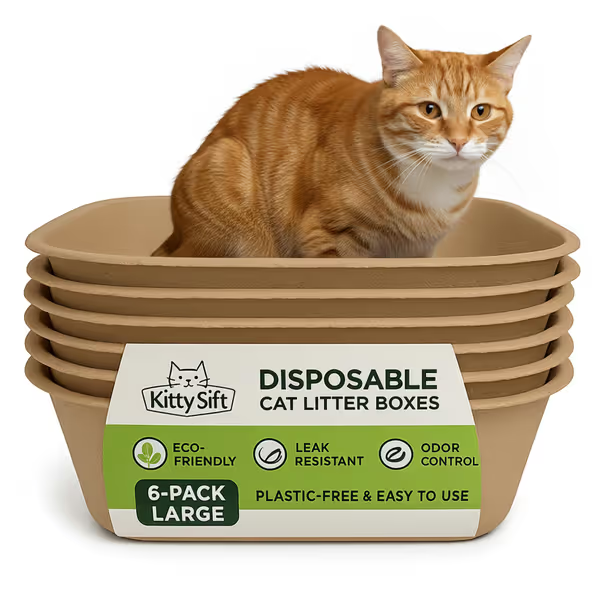
Kitty Sift Disposable Litter Box
Effortless, eco-friendly litter changes for a cleaner, odor-controlled home.
$24.99
Count6 Boxes
Count6 Boxes
Pros
No scrubbing needed; simple fill, use, and replace.
Durable, leak-resistant, recyclable material.
Cons
Size receives mixed feedback for larger cats.
Customers find the litter box easy to use, particularly with the pooper scooper, and appreciate that it makes cleaning much easier by eliminating the need for scrubbing or dealing with liners. Moreover, the durability is positive, with customers noting it lasts well with two cats and holds up for approximately two days.
Customers find the litter box easy to use, particularly with the pooper scooper, and appreciate that it makes cleaning much easier by eliminating the need for scrubbing or dealing with liners. Moreover, the durability is positive, with customers noting it lasts well with two cats and holds up for approximately two days.
The Edible Item Dilemma: Clutter or Catalyst?
Here's the honest truth: 60% of contents in my boxes were edible (treats, chews, wellness items). For single-cat households, this risks pantry chaos. But with strategy, it becomes an asset:
- Rotate treats like toys: Store in labeled, nested silicone containers (I use 3oz jars that fit 2x4 on a shelf)
- Redirect extras: Donate unopened treats to shelters (many welcome them!)
- Swap wisely: RescueBox's customer service offers substitutions, so ask for extra toys when ordering
This pragmatic approach turns potential clutter into a RescueBox value assessment win: $40+ retail value with $5 redirected to shelter animals per box. Still, if edible-heavy boxes trigger your clutter anxiety, consider pairing this with a dedicated toy-only service.
Real User Experience: Small Space, Big Impact
Tracking RescueBox customer experience through my minimalist lens revealed two game-changers:
-
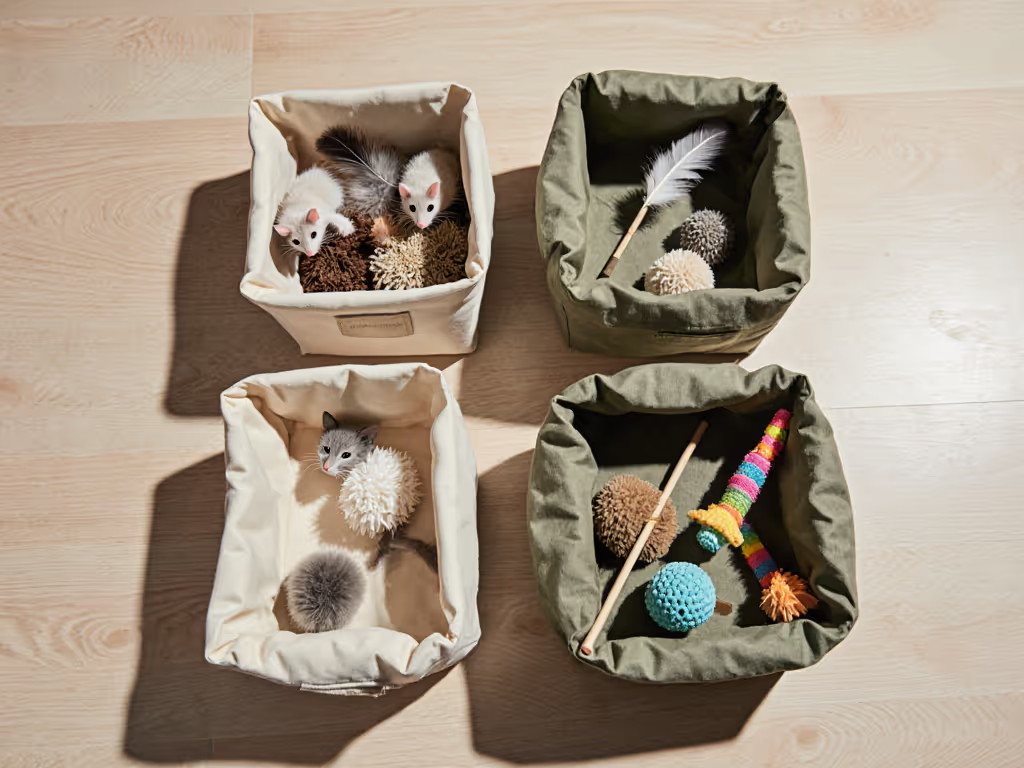
The "Lidded Basket" System: Each box includes a collapsible fabric bin (10" x 7") pre-stuffed with that month's theme. This became my only toy storage solution. No more scattered props. Cats associate the bin with novelty, so I swap its contents monthly without buy-in resistance.
-
Themed Rotation Logic: Instead of random items, toys coordinated to build a single "prey profile" sequence. For the behavior science behind this approach, learn the prey sequence play method. Silent Woods box included: mouse (chase), crinkle leaf (pounce), feather wand (capture). Completing the cycle reduced redirected aggression by eliminating "unfinished hunt" frustration.
"store in sight, not in piles" - my mantra for integrating enrichment without chaos. That lidded basket lives on a closed shelf, visually calm yet instantly accessible.
The Clutter-Proofing Checklist: Is This Right for You?
Not every subscription solves your pain points. Use this framework before subscribing:
| Criteria | RescueBox Fit | Better Alternatives |
|---|---|---|
| Noise sensitivity | ✅ 90% non-mechanical, sub-40 dB toys | Avoid if you need zero sound (opt for silent kickers) |
| Under 500 sq ft? | ✅ All toys store in one 12" bin | BoxCat for larger setups |
| Multi-cat household | ⚠️ Edible-heavy; request toy swaps | KitNipBox Multi-Cat |
| Treat allergies | ✅ Customizable substitutions | Meowbox (treat-free option) |
| Clutter zero tolerance | ⚠️ Requires edible management | DIY rotation with local store finds |
Critical Red Flags (based on my space-smart testing):
- If your cat ignores all treat-based play (common in senior cats), skip this
- No customization mid-subscription, plan swaps upfront
- Overseas shipping adds clutter risk (longer waits = forgotten novelty)
Making It Work: Your Minimalist Action Plan
RescueBox isn't clutter-proof out of the box, but with tiny tweaks, it becomes a clutter-solving habit. Try this 3-step ritual:
Step 1: The Unboxing Edit (Do This Immediately)
- Keep: 1-2 items max per category (toys/treats) that fit your storage zone (e.g., my 10" shelf nook)
- Donate: Unused treats or duplicate toys before they enter your home
- Repurpose: Use the themed box as wall storage (mounted with brackets) or cat cave
This stops the "clutter creep" before it starts.
Step 2: Design Your Micro-Rotation
Most boxes fail because toys lose novelty. My fix: RescueBox themes become play seasons. Assign one box per season (3 months):
- Silent Woods: Autumn play (crisp air themes)
- Coastal Calm: Summer energy (water-inspired motions)
Store off-season items in labeled containers under the bed. Cats react to "newness" even with previously ignored items, proven by my formerly disengaged senior cat's pounce revival.
Step 3: Anchor Play to Existing Routines
Forget "20 minutes daily." Attach play to unavoidable moments:
- Pre-breakfast wand session (5 mins while coffee brews)
- Post-dinner treat hunt (toss 3 treats down hallway for chase)
- Pre-bed blind box (hide one toy in paper bag for self-play)
This creates consistency without adding tasks. When our play corner lived inside a lidded basket, evenings finally felt calm, and play sessions increased because the space invited focus, not overwhelm.
Final Verdict: Clutter Reduction Through Design
RescueBox earns its place for guardians who value space-smart enrichment and shelter support, but it's not magic. If you're drowning in ignored toys, its themed, low-decibel approach solves the core clutter-boredom loop only if you:
✅ Pre-commit to donating unused items ✅ Use the included storage bin as your only toy zone ✅ Swap edibles for toys during sign-up
For my sunlit loft, it finally broke the cycle of guilt and clutter. The cats now treat that lidded basket like a novelty shrine: no more scattered toys, no 3 a.m. jingle alarms. Calm rooms invite play; chaos shuts curiosity down. And when you're feeding shelter animals while streamlining your space? That's enrichment that truly enriches.
Related Articles