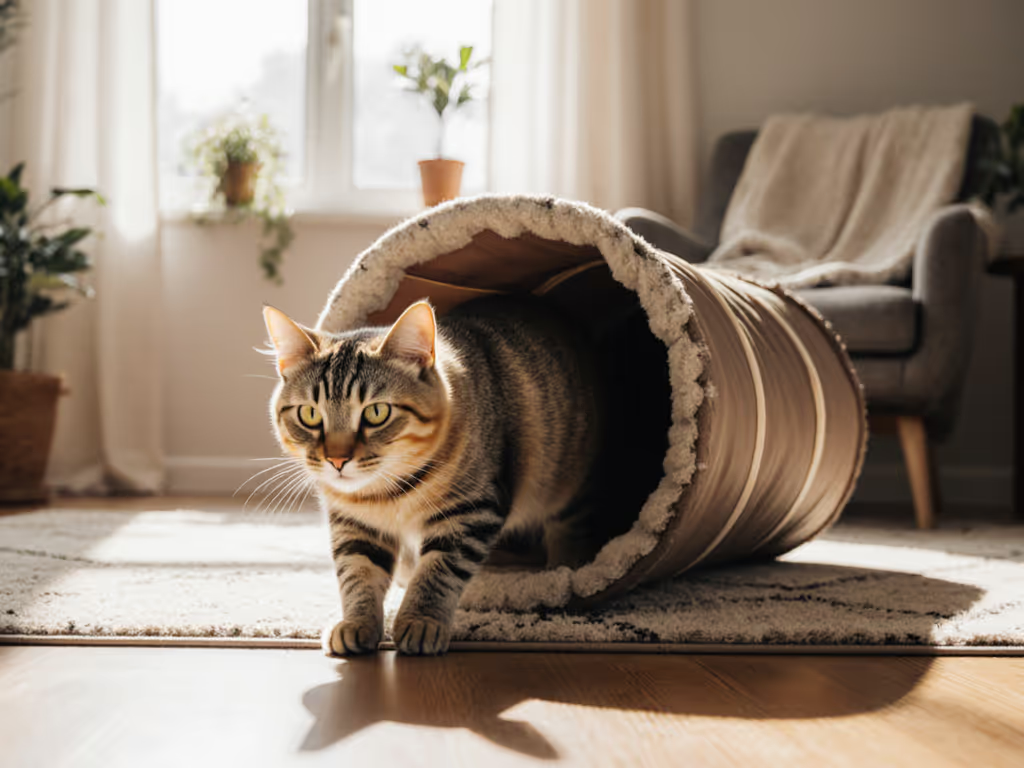
Quiet Moving Cat Toys Compared for Compact Living
By Tariq Hassan • 1st Jan
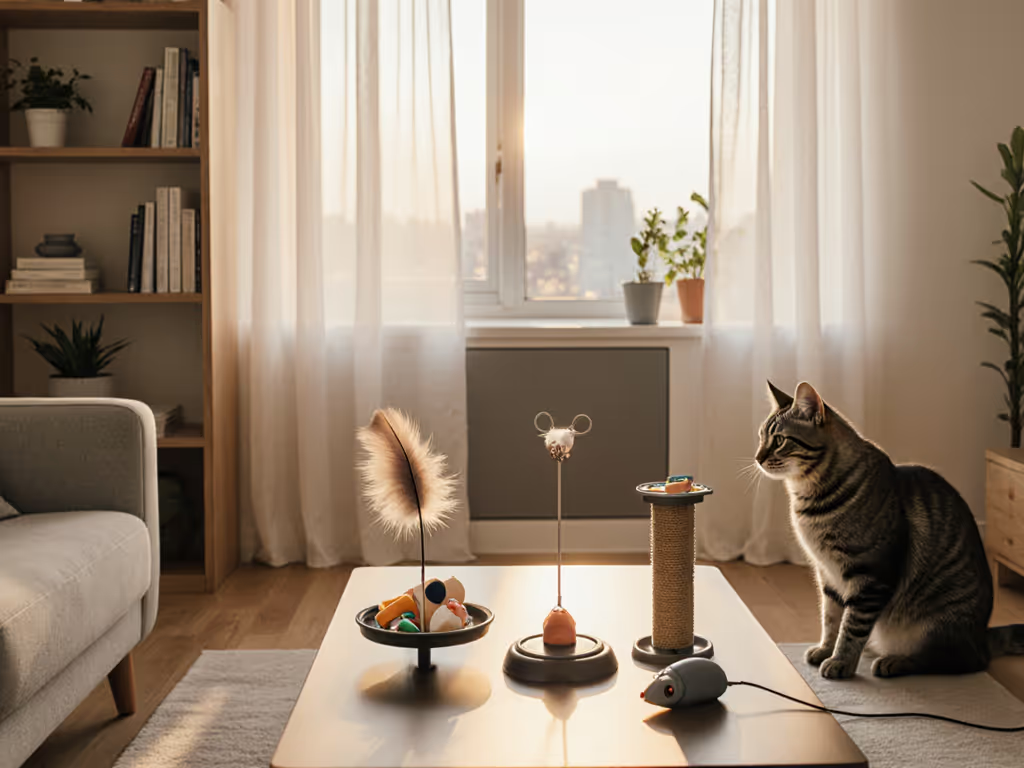
In today's compact urban environments, moving cat toys have become essential for small-space cat play that respects both feline needs and spatial limitations. For guardians in apartments, condos, or small homes, the right motion-based enrichment bridges the gap between your cat's instinctual prey drive and your constrained square footage. This comprehensive FAQ addresses how quiet-moving options can resolve common behavioral challenges while integrating seamlessly into minimalist living spaces (without contributing to the clutter that plagues so many well-intentioned households).
Stalk, chase, catch, eat, groom, sleep: close the loop.
Why do quiet moving toys matter for compact living environments?
Conventional cat toys often fail in small spaces for three critical reasons: they're too large, too loud, or too quickly ignored. When cats can't complete their predatory sequence in appropriate ways, they channel that energy into behaviors like 3 AM counter-surfing or door-dashing, problems that become magnified when walls are close together. Quiet moving toys solve this by providing autonomous stimulation that respects sound-sensitive environments (for both cats and humans) while occupying minimal physical space. Unlike traditional laser pointers (which we avoid due to the missing food finish), these systems offer independent engagement without sacrificing the essential conclusion to the hunt. For background on why finishing the hunt matters, read our prey sequence play primer.
What predatory needs should effective moving cat toys fulfill?
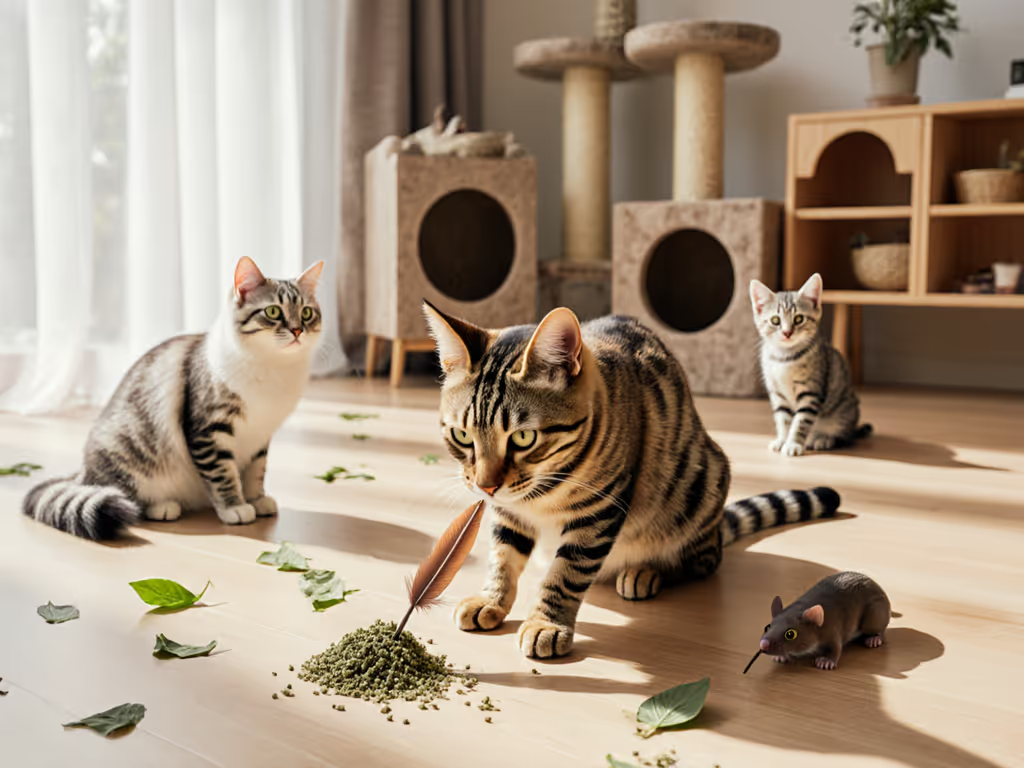
Successful indoor cat entertainment must replicate the complete prey sequence: search, stalk, chase, capture, kill bite, and consumption. Most commercial toys focus only on the chase phase, creating what I call "arousal traps" where cats reach peak excitement but never achieve behavioral satiety. In my shelter work, I've observed how incomplete sequences manifest as cage-front swatting and redirected aggression, issues that followed cats into homes until we implemented protocols that ended play with food rewards.
Your quiet moving toy must provide:
- Variable motion patterns (not robotic repetition)
- Clear visual targets mimicking natural prey
- A definitive "capture moment"
- Optional integration with food rewards
Toys that miss these elements become ignored clutter within days, contributing to the "sunk-cost frustration" so common among well-meaning guardians.
How do quiet moving toys help prevent overstimulation in confined spaces?
Compact living intensifies arousal management challenges. When cats share tight quarters, overstimulation during play can trigger resource guarding or redirected aggression, what I document as "spillover incidents" in multi-cat households. Quiet moving toys become essential de-escalation tools when designed with these thresholds:
- Self-terminating sessions: Automatic shut-offs after 5-10 minutes prevent prolonged excitement
- Adjustable intensity: Variable speed settings accommodate different arousal baselines
- Physical boundaries: Contained designs (like track systems) prevent chaotic zoomies through limited square footage
- Predictable patterns: Non-random movement reduces anxiety triggers
Remember: bitey is information. When cats bite hands during play, they're signaling protocol failure, not aggression. Quiet moving toys help establish clearer boundaries by removing human variables that confuse arousal thresholds.
What key features should compact-space guardians prioritize?
When selecting good cat toys for small living, apply these evidence-based criteria:
- Footprint efficiency: Maximum 12" x 12" base occupying <1 sq. ft. of floor space
- Noise ceiling: Under 45 dB (quieter than refrigerator hum)
- Modular storage: Components that nest or disassemble completely
- Prey-specific motion: Options matching your cat's preferred prey profile (bird/rodent/insect)
- Finish integration: Built-in treat compartments or compatible with food reward systems
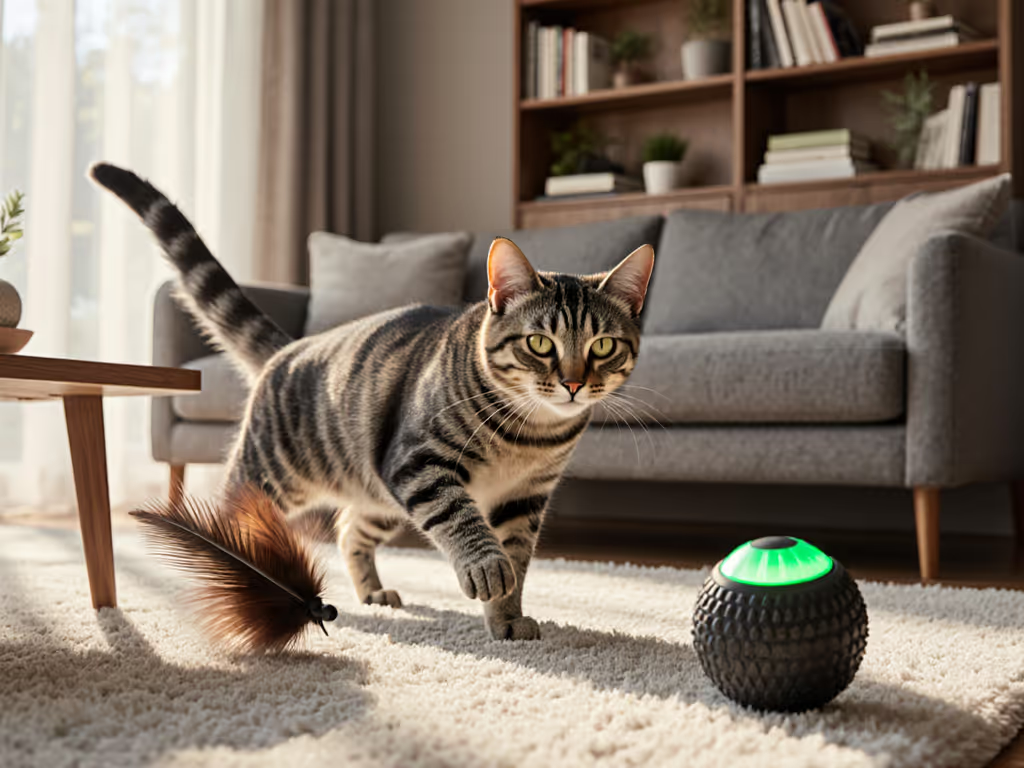
Avoid toys with constant motion patterns. These become predictable within 72 hours, triggering the "novelty cliff" where cats lose interest. Instead, seek systems with randomized pauses and direction changes that mimic natural prey behavior. For near-silent rolling options that fit in under 1 sq. ft., see our quiet cat ball picks.
How do I integrate moving toys into my small-space play protocol?
Treat toy integration like a clinical protocol with defined phases:
Phase 1: Assessment
- Observe which prey types your cat stalks (feather wands vs. rolling balls)
- Note current arousal triggers (e.g., tail chasing after 3 minutes of play)
Phase 2: Controlled Introduction
- Start with 3-minute sessions, twice daily
- Place toy against wall to create natural boundary
- Immediately follow with food reward (kibble or treat)
Phase 3: Protocol Adjustment
- Increase session length by 30-second increments only when your cat shows satiety signs
- Introduce rotation system with maximum 3 toys active at once
This structured approach prevents the sensory overload that transforms interactive cat toys from enrichment into stressors, particularly crucial in multi-cat environments where tension spreads quickly through confined spaces.
Can quiet moving toys replace interactive play entirely?
Never. While excellent for filling gaps between human-led sessions, autonomous toys cannot replicate the social bonding and arousal regulation of structured interactive play. In multi-cat households, I've seen overreliance on moving toys exacerbate resource competition when cats perceive the toy as a contested item.
Treat moving toys as complementary tools that:
- Provide enrichment during work hours
- Maintain prey drive engagement between interactive sessions
- Offer low-stimulus options for anxious cats
- Create predictable routines for night-owl guardians
The critical distinction: interactive play must remain the foundation, with autonomous toys supporting rather than supplanting the human-cat connection that regulates arousal most effectively.
How do I prevent toys from becoming ignored clutter in small spaces?
Apply these anti-clutter protocols:
- The 72-hour rule: If unused after three days, retire the toy (don't force engagement)
- Seasonal rotation: Store inactive toys in sealed containers (prevents scent saturation)
- Space anchoring: Designate one permanent "play zone" (e.g., corner by window)
- Aesthetic integration: Choose neutral-toned toys that complement home decor
In my five-cat household, I use under-bed storage for inactive toys and feature only one moving system at a time. This maintains novelty while respecting the "visual clutter" pain point that plagues so many minimalist guardians.
What safety considerations are critical for unattended moving toys?
Prioritize these often-overlooked risk flags:
- Cord management: Battery-powered > plug-in (avoid tripping hazards)
- Ingestion safeguards: No loose string components or detachable small parts
- Heat monitoring: Ensure no component exceeds 100°F during operation
- Auto-shutoff: Maximum 15-minute runtime without supervision
Particularly for kitten households or seniors with mobility issues, verify toys meet ASTM F963-17 safety standards. Never leave moving toys running overnight, which creates conditioned arousal that undermines sleep regulation. For material and construction checklists, see our safe cat toy materials guide.
How do these toys impact multi-cat dynamics in tight quarters?
In compact multi-cat homes, moving toys become powerful tools for reducing conflict when implemented with species-specific protocols:
- Staggered sessions: Run toys at different times for cats with incompatible arousal thresholds
- Territory mapping: Place units in separate zones (even 6 feet apart creates psychological separation)
- Resource abundance: Maintain multiple units to prevent competition
- Arousal matching: Assign different prey types to match individual play styles
I've observed dramatic reductions in inter-cat tension when guardians implement these strategies, particularly when they conclude autonomous play sessions with food rewards in separate locations.
What's the most effective routine for compact living?
Create a sustainable protocol with these evidence-based steps:
- Morning: 5-minute moving toy session + food reward (mimics natural dawn hunting)
- Work hours: Quiet moving toy during human absence (max 30 minutes total) If you work from home, use these silent WFH play strategies to keep routines consistent without distractions.
- Evening: 10-minute interactive session with wand + food reward (completes sequence)
- Before bed: 3-minute moving toy session + food reward (reduces night zoomies)
Adjust session lengths based on individual cat needs. Never force extended play. The goal isn't maximum activity but appropriate arousal modulation that supports restorative sleep cycles.
Actionable next steps for your compact play system
Begin implementing these evidence-based protocols within 24 hours:
- Audit your space: Identify one 12" x 12" zone suitable for autonomous play
- Assess prey profiles: Note which movements your cat tracks naturally (feathers, balls, insects)
- Establish boundaries: Choose one quiet moving toy matching your cat's needs and space constraints
- Implement finish protocol: Pair initial sessions with targeted food rewards
This isn't about buying more. It is about implementing smarter. When moving toys serve as precision tools within your complete predatory sequence protocol, they transform from clutter into calibrated solutions. Start small, measure your cat's response, and remember: the most effective compact cat play systems aren't those that occupy the least space, but those that help your cat achieve genuine behavioral satiety within your spatial reality.
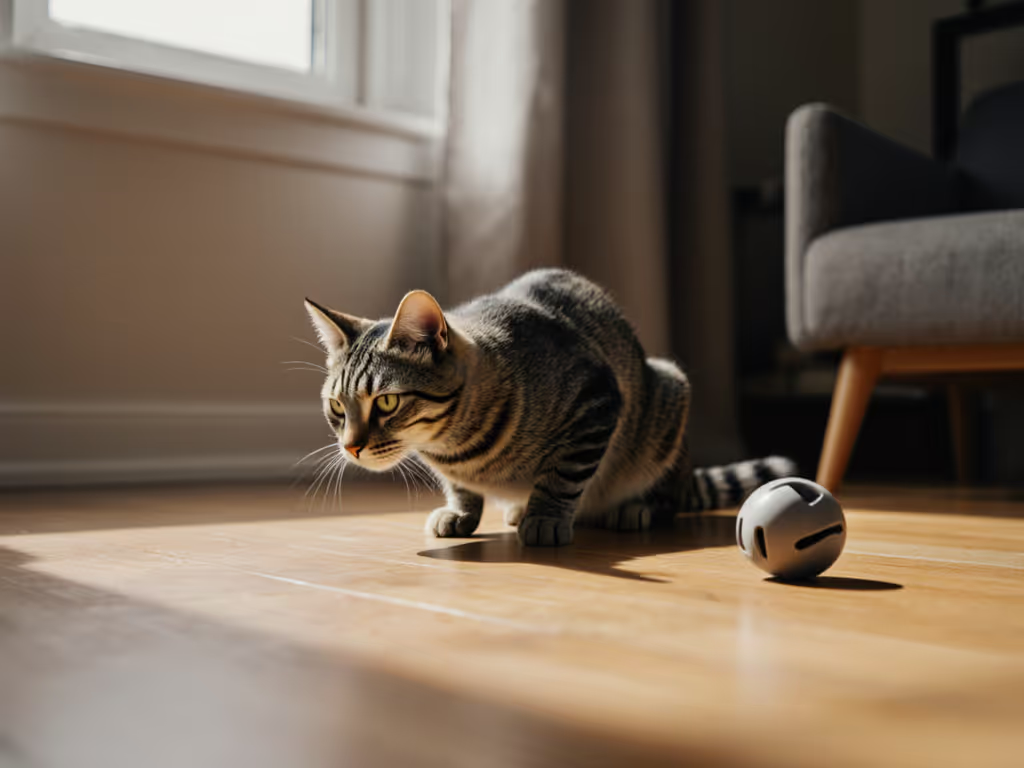
Stalk, chase, catch, eat, groom, sleep: close the loop.
Related Articles